
Are All Genuine Leather Hides the Same?
The answer is no. No two genuine leather hides are ever identical—and this is not a flaw, but the very nature of the material. Unlike industrial materials manufactured with consistency in mind, leather originates from a living organism. Each surface carries its own unique marks, structure, and characteristics shaped over time.
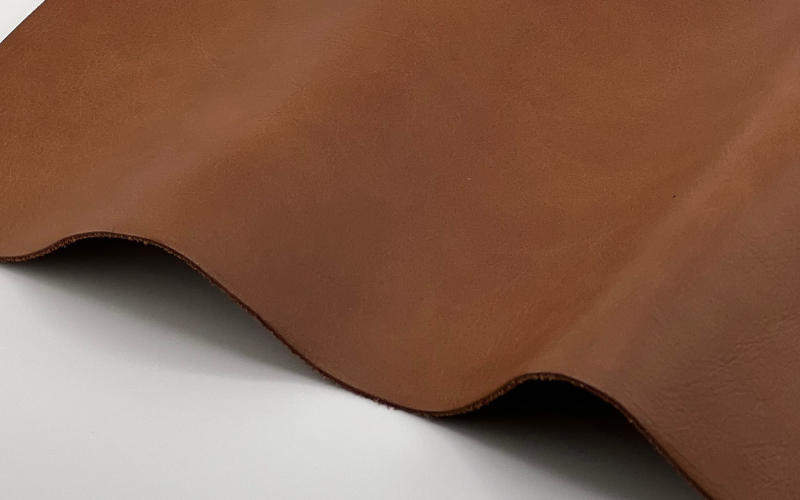
Where Does a Leather Hide Begin?
A leather hide does not begin in a factory or showroom—it begins with life itself. Throughout its lifetime, the hide is continuously influenced by:
- environmental conditions
- natural movement
- physical interactions
These factors are recorded on the surface as:
- grain variations
- natural creases
- subtle markings often invisible at first glance
From the very beginning, every hide is already different.
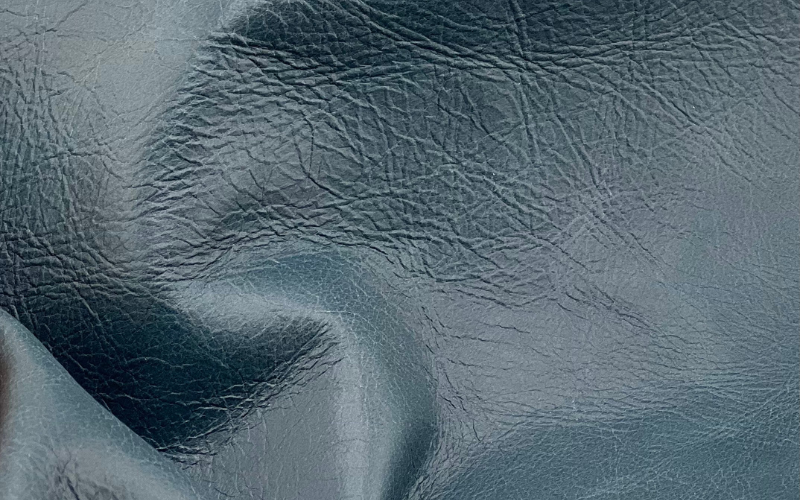
Why Is Every Leather Hide Unique?
The variation in genuine leather is not random—it is the result of multiple combined factors.
1. Natural Collagen Structure
Each animal has a unique collagen fiber structure, directly affecting:
- softness
- elasticity
- light reflection
This is the fundamental reason leather can never be perfectly uniform.
2. Living Environment
Climate and natural conditions shape the quality of the hide.
For example:
-
Cattle raised in colder regions tend to develop thicker, denser hides
Warmer climates often produce softer, more flexible leather
3. Different Areas of the Hide
Even within a single hide, different sections behave differently:
Back area → firmer and more stable
Belly area → softer and more elastic
Neck area → natural wrinkles and folds
This is why proper leather application in furniture requires material understanding—not just aesthetic selection.
Surface Finishing and Its Impact
Leather types that preserve more natural surface—such as aniline leather—show greater variation. In contrast, heavily finished or pigmented leather creates a more uniform appearance, but reduces some of the original natural character. Uniformity is often achieved through higher surface processing.
What Does This Natural Variation Mean?
The uniqueness of leather is not just visual—it brings real value.
1. Authentic Material Experience
Non-repetitive surfaces create a more natural tactile experience, unlike embossed or artificial materials.
2. Visual Depth
Genuine leather interacts with light unevenly.
Different angles reveal different tones, adding depth and richness to the space.
3. Aging Value (Patina)
Over time, leather does not deteriorate in the same way synthetic materials do. Instead:
- the surface softens
- tones deepen in high-contact areas
- a unique patina develops
Because each hide starts differently, its aging process is also entirely unique.
Is Uniform Leather Better?
In some cases, uniformity is desirable—especially for projects requiring:
-
consistency
-
ease of maintenance
-
high durability
However, achieving perfect uniformity usually involves heavier surface treatment.
This is not wrong—it is simply a different choice.
If the goal is to preserve natural beauty and material depth, then variation is not a limitation—it is the value.
The GreenMoss Perspective
At GreenMoss, variation is not something to eliminate—it is something to understand.
Selecting leather is not only about color, but also about:
-
surface characteristics
-
usage context
-
design intention
A well-designed living space does not require perfect uniformity.
It requires materials that are authentic enough to evolve with time.
Conclusion
Genuine leather is never identical—and that is precisely what defines its value.
Each hide is the result of a natural process, carrying unique, non-repeatable characteristics.
When understood correctly, choosing leather is no longer about perfection—but about selecting the right material depth for a living space.