
In the world of high-end interiors, materials do more than serve a functional purpose—ensuring durability and usability. They also act as a language of aesthetics, emotion, and cultural identity.
Among countless options, Italian bovine leather has emerged as a true standout, trusted by architects and interior designers for projects ranging from refined luxury to iconic landmarks.
So what gives Italian leather its enduring appeal?
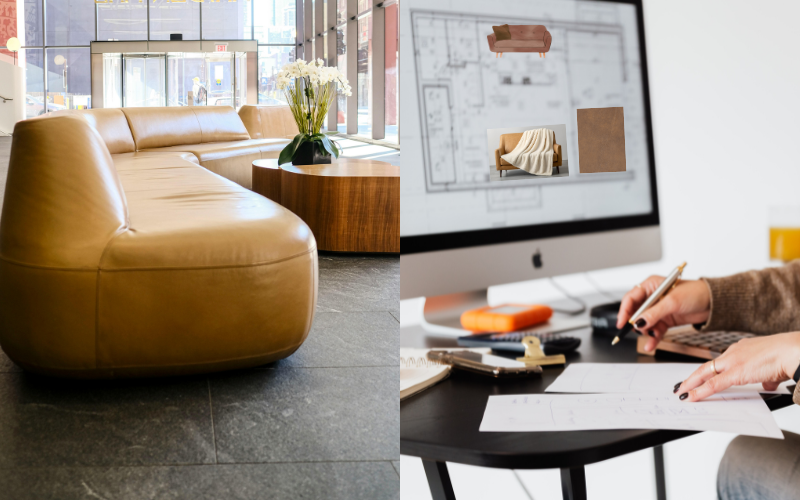
1. Exceptional Quality from the Source
Italian bovine leather is renowned for its carefully selected raw materials and rigorous tanning processes:
-
Raw materials: Cattle raised in Europe’s temperate climate, resulting in hides with fewer defects and a finer fiber structure
-
Production process: A combination of centuries-old tanning traditions in regions such as Tuscany and Florence, paired with modern technologies—from environmentally responsible processing to dye-through coloration
-
Technical standards: Every hide undergoes strict testing for thickness consistency, tear strength, flex resistance, abrasion resistance, cold crack performance, and especially fire resistance in compliance with European EN 1021 standards
These factors allow architects and designers to specify Italian leather with complete confidence in premium projects—from villas and penthouses to five-star hotels and Grade-A office spaces.
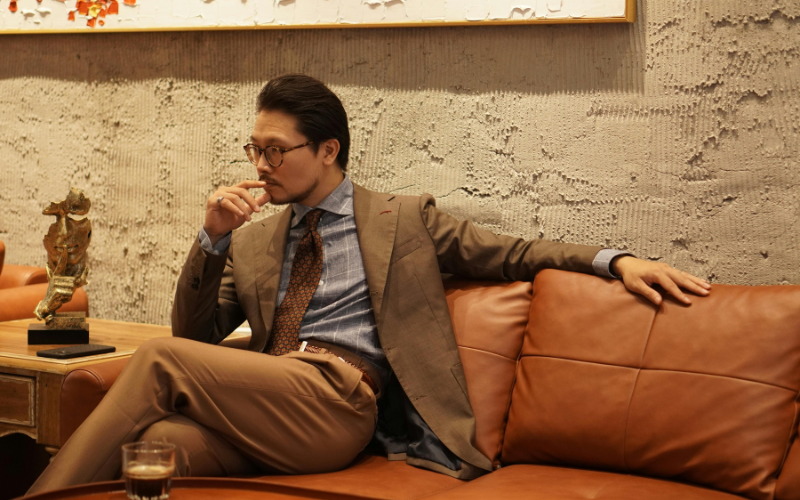
2. Refined Aesthetics – The Language of Emotion
Beyond durability, Italian bovine leather is admired for its natural beauty and emotional resonance:
-
Unique grain patterns: Each hide carries distinct natural markings—no two are ever the same
-
Soft, tactile surfaces: A warm, luxurious handfeel upon touch
-
Rich color palette: From timeless neutrals (beige, brown, gray) to expressive fashion tones (emerald green, terracotta, champagne gold)
Depending on the finish, Italian leather offers versatile design options:
-
Aniline: Celebrates natural authenticity—ideal for luxury and bespoke interiors
-
Semi-Aniline: Balances natural beauty with enhanced durability, well-suited for high-end apartments
-
Pigmented: Protective surface coating, perfect for public spaces, hospitality, and F&B environments
-
Corrected Grain: Surface-treated and embossed to improve uniformity and ease of maintenance—ideal for large-scale commercial projects
This versatility enables designers to integrate Italian leather seamlessly across styles—from Scandinavian minimalism and Wabi-Sabi to Contemporary and Luxury interiors.
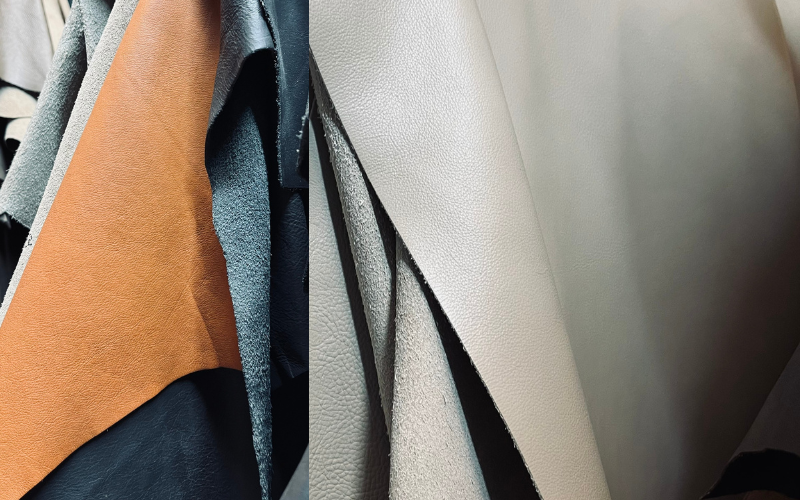
3. Durability and Long-Term Value
A premium interior project must not only look impressive at handover, but also retain its beauty and performance over time. Italian bovine leather excels with:
-
High scratch and abrasion resistance, especially in Pigmented finishes
-
Excellent elasticity, reducing cracking under climate changes
-
Natural patina development: Over time, leather gains a soft sheen and deeper character, adding individuality to each piece
As a result, sofas, lounge chairs, and leather-upholstered panels deliver lasting performance while elevating overall project value.
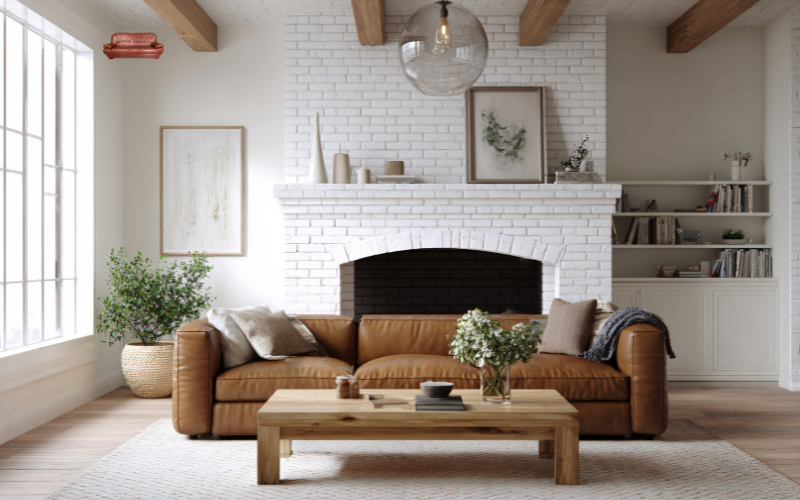

4. Cultural Depth and Emotional Value
What truly sets Italian leather apart is not only technique, but cultural heritage:
-
Each hide is rooted in centuries-old craftsmanship from regions like Florence, Veneto, and Tuscany, where artistry, handcraft, and Italian creativity are preserved
-
By choosing Italian leather, architects bring a piece of European heritage into their projects—adding narrative and emotional depth for clients
-
This is why iconic developments worldwide—from villas in Dubai and penthouses in New York to five-star hotels in Tokyo—continue to favor Italian leather
5. Environmental Responsibility – A Material for the Future
As sustainable and circular design gains momentum, Italian bovine leather continues to assert its relevance:
-
Modern tanning processes significantly reduce harmful chemicals
-
Many tanneries hold ISO 14001 certification and are audited by the Leather Working Group (LWG)
-
Italian leather is recyclable, and its by-products (collagen, gelatin) are reused in medical, cosmetic, and food industries
These attributes align closely with the principles of circular design, increasingly embraced by the global architecture and interior community.
Conclusion
More than just a material, Italian bovine leather represents a synthesis of quality, aesthetics, cultural heritage, and sustainability.
This is why architects and interior designers consistently choose it—transforming each project into a timeless work of design.