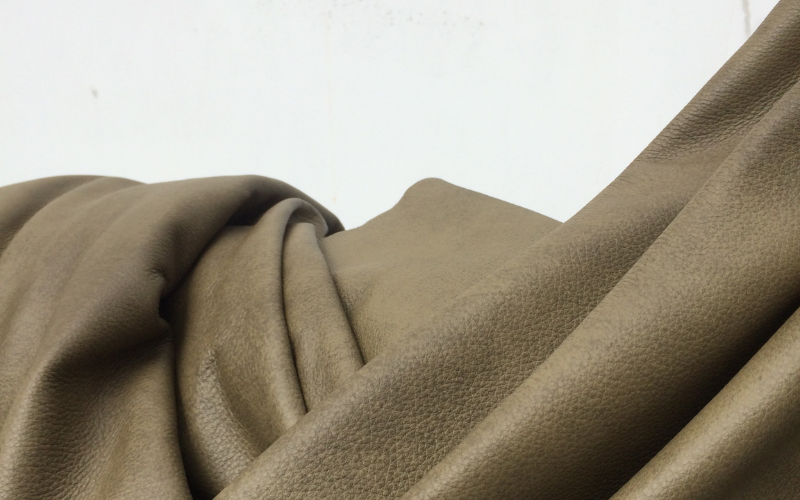
How a tannery operates: key production stages
The leather tanning process consists of multiple sequential stages, each directly influencing the structure and performance characteristics of the leather.
1. Selection – Raw hide sourcing
Hides are selected based on:
- thickness
- collagen fiber structure
- level of natural characteristics (veins, wrinkles, scars)
- surface consistency
Raw materials typically originate as by-products of the food industry, contributing to efficient use of natural resources.
2. Beamhouse – Cleaning and preparation
Raw hides are processed to remove:
- hair
- fat
- excess proteins
- biological impurities
This stage prepares the hide for tanning by achieving a stable and clean substrate.
3. Tanning – Collagen stabilization
This is the most critical stage of the process.
The collagen fibers in the hide are stabilized using tanning agents such as:
- Chrome tanning (widely used for structural stability)
- Vegetable tanning (plant-based tannins)
- Chrome-free / metal-free tanning systems
Tanning enables leather to:
- resist decomposition
- maintain flexibility
- improve tensile strength and dimensional stability
4. Dyeing – Color penetration
Leather is dyed through to ensure:
- color consistency
- depth of tone
- resistance to fading during use
Dyes must comply with international chemical regulations such as REACH.
5. Finishing – Surface performance engineering
The leather surface is treated to achieve specific visual and functional characteristics:
- Aniline → preserves the most natural appearance
- Semi-aniline → balance between natural look and durability
- Pigmented → uniform color with higher stain resistance
- Nubuck → velvety touch effect
- Embossed → artificial grain pattern
Each finishing method results in different performance characteristics for interior design applications.
Environmental and quality standards in modern tanneries
The modern leather industry is subject to strict environmental and chemical regulations.
Common standards include:
REACH Regulation (EU)
Controls chemical substances used in production to ensure safety for both users and the environment.
LWG – Leather Working Group
Certification evaluation:
- wastewater management
- energy consumption
- traceability systems
- chemical management
- environmental performance
VOC control
Regulation of volatile organic compounds to maintain indoor air quality.
Tanneries that meet these standards help ensure faster odor stabilization and safer use in enclosed interior environments.
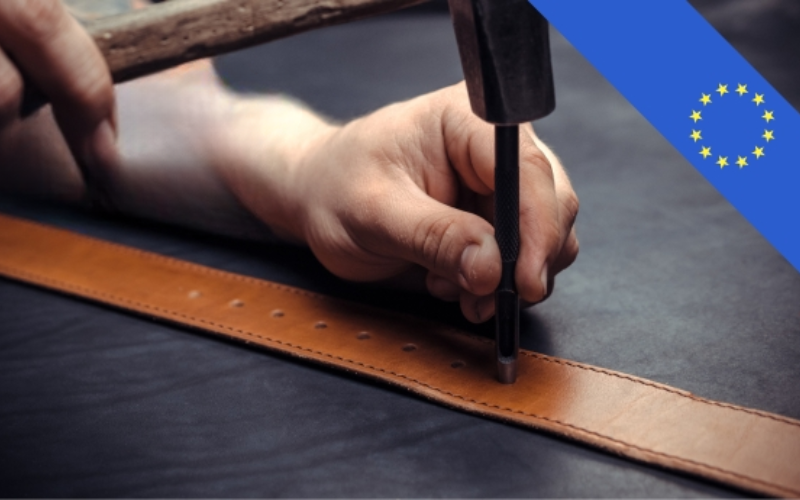
Why tannery expertise directly impacts upholstery leather quality
In interior applications, leather must withstand:
- continuous friction
- temperature fluctuations
- mechanical stress
- light exposure
- humidity variation
A technically capable tannery ensures:
- resistance to peeling or delamination
- flexibility without cracking at stress points
- long-term color stability
- ease of maintenance throughout the product lifecycle
This is why premium interior brands often work directly with tanneries rather than sourcing only through intermediaries.
Tannery within the value chain of genuine leather
A tannery is not merely a processing facility, but a technical center that determines:
- material structure
- durability performance
- aesthetic characteristics
- long-term stability
A finished leather hide is the result of multiple variables working together:
cattle breed, climate conditions, processing technology, and craftsmanship expertise.
Conclusion
Understanding the role of the tannery helps architects, designers, and manufacturers select materials aligned with project performance requirements.
Leather quality is not defined solely by what is visible on the surface, but by the entire transformation process behind it — where technical expertise and accumulated know-how determine the final value of the material.