
WHAT DO RETANNING, DYEING, AND SOFTENING MEAN?
After cowhide goes through the tanning process, its collagen structure becomes stabilized and protected from decomposition. However, at this stage, the leather is still not fully ready for interior or upholstery applications.
This is why the leather industry requires another important stage known as wet-end processing, which includes:
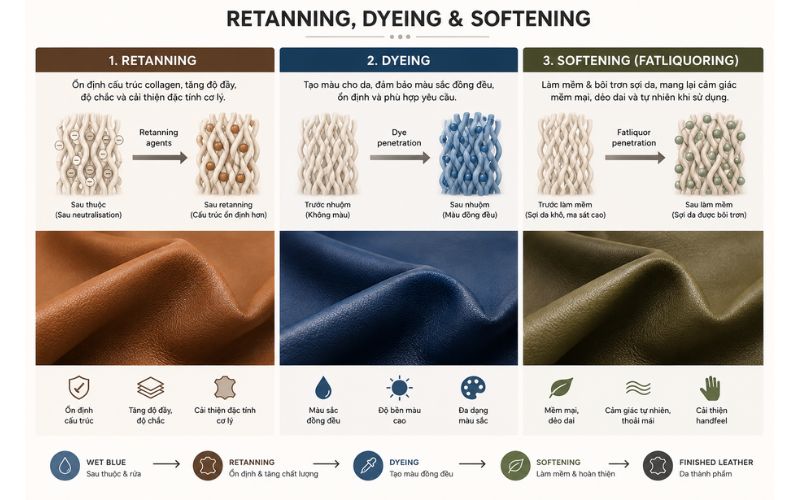
- Retanning – adjusting and refining the leather structure after the main tanning process
- Dyeing – adding colour to the leather
- Softening/ Fatliquoring – softening the leather and lubricating its fibre structure
These three processes play a decisive role in determining:
- The softness of the leather
- The hand feel
- Colour consistency
- Grain stability
- Practical performance in interior applications
For high-end Italian upholstery leather in particular, this is the stage where the true “character” of the material begins to take shape.
Neutralisation - Preparing the Leather Before Further Treatment
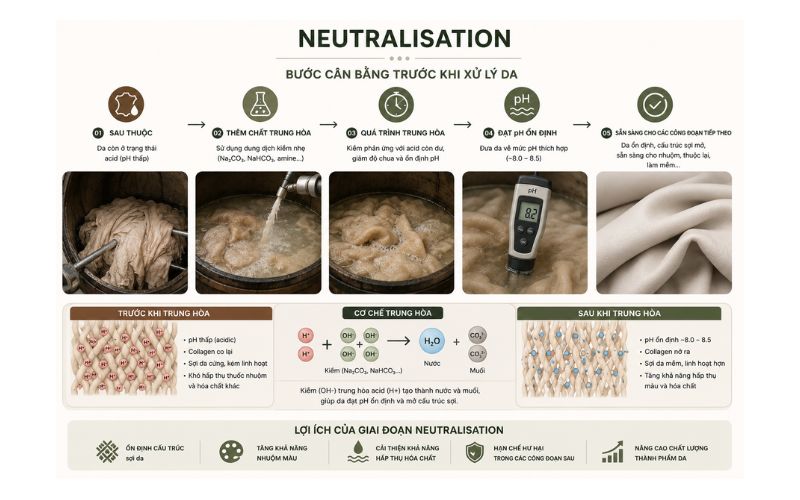
Before leather can be dyed or softened, it needs to go through a process called neutralisation, which balances the pH level of the material.
After chrome tanning, leather usually retains a certain level of acidity. If this acidity is not properly controlled, the chemicals used in later stages may not penetrate evenly into the collagen fibre structure.
During neutralisation:
- Mild alkalis are used to reduce acidity
- The leather fibre structure is opened up to allow deeper chemical penetration
- The leather becomes more receptive to dyes, retanning agents, and fatliquors
This step helps stabilize the leather and prepares it for the next stages of processing.
Dyeing Process - How Cowhide Is Coloured
How Is Cowhide Dyed?
In leather manufacturing, the most commonly used dyes include:
- Acid dyes
- Direct dyes
- Premetallised dyes
Each type of dye creates different results in terms of:
- Colour penetration
- Surface effect
- Light fastness & Colour durability
Dyes may be introduced into the leather in different forms, such as:
- Pre-dissolved liquid solutions
- Dry powder form
The dyeing process can take place:
- After neutralisation
- Or after retanning, depending on the intended material outcome
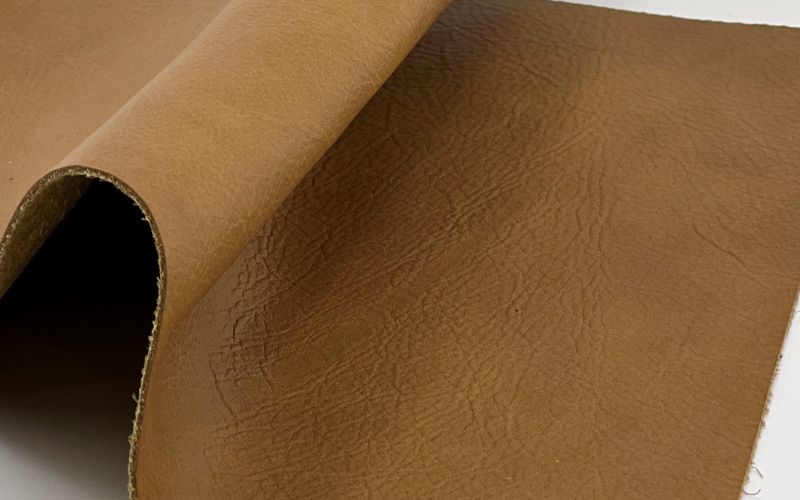
How Can Two Brown Leathers Look Different?
The colour of leather does not come only from pigments or the final finishing layer.
The difference also depends on:
- How deeply the dye penetrates the leather
- How far the colour travels into the fibre structure
- The type of tanning method used
- The openness and condition of the grain surface
- The amount of oil and polymer inside the leather structure
This is why some semi-aniline leathers have a very natural depth of colour, while pigmented leather tends to look more uniform and stable.
Retanning Process - Refining the Leather After Tanning
What Is Retanning?
Retanning is the process of introducing additional tanning materials into leather after the main tanning stage.
Its purpose is not to “tan the leather again” in the basic sense. Instead, retanning is used to:
- Adjust the leather structure
- Increase fullness
- Control the grain
- Create the desired feel
- Prepare the leather for finishing
Common retanning materials include:
- Vegetable tannins
- Synthetic tanning agents
- Acrylic resins
- Fillers
How Does Retanning Affect Leather Quality?
Retanning is one of the key processes that determines several important qualities of leather.
1. Fullness
Depending on the formula used, leather can become:
- Softer and fuller
- Firmer and more compact
- Denser and more stable in fibre structure
Retanning helps control how substantial, resilient, or flexible the leather feels.
2. Grain Stability
Retanning also helps:
- Create a more even grain
- Reduce loose grain
- Improve embossing performance
This is especially important for upholstery leather, where surface appearance and long-term stability both matter.
3. Hand Feel
The same piece of leather can feel completely different depending on the retanning formula.
Different formulations can create different tactile effects, such as:
- Soft and drapey
- Dry touch
- Waxy touch
- Plump feel
- Firm touch
Leather Softening - Creating the Right Level of Softness
After retanning and dyeing, the leather continues to be processed to achieve the right degree of softness.
Without this step:
- The fibre structure may stick together as the leather dries
- The leather can become stiff
- Elasticity may be reduced
Fatliquoring Process - Where Leather Softness Is Formed
What Is Fatliquor?
Fatliquors are oils that have been chemically modified so they can:
- Dissolve or emulsify in water
- Penetrate the leather fibre structure
- Lubricate collagen fibres
This is one of the most important steps in producing upholstery leather with the right comfort, softness, and flexibility.
How Does Fatliquor Affect Leather?
The deeper the fatliquor penetrates into the leather, the softer and smoother the material can feel.
However, the surface may develop a coarse break if too much oil is used. It may also affect the firmness and stability of the grain.
For this reason, the fatliquoring formula must be carefully controlled to balance softness, structural stability, and the final user experience.
Common Oils Used in Fatliquoring
The leather industry may use different types of oils, including:
- Synthetic oils
- Fish oils
- Vegetable oils
- Animal oils
- Tallow greases
These oils are often:
- Sulfonated
- Or sulfited
This helps improve their ability to self-emulsify in water and penetrate the leather more effectively.
Polymeric Softening - Softening Leather with Polymer
In addition to oils, modern leather production also uses water-soluble acrylic polymers to:
- Increase softness
- Improve heat resistance
- Improve light fastness
- Enhance physical performance
This technology is commonly used in modern automotive leather and upholstery leather.
Waterproofing - Improving Water Resistance
Certain acrylic polymers can also help:
- Increase water repellency
- Reduce moisture absorption
- Improve surface stability during actual use
In many cases, silicone oils may also be added to enhance waterproofing performance.
Why Does Italian Leather Often Feel “Soft Yet Structured”?
This quality comes from the balance between several factors:
- Retanning structure
- Fatliquoring level
- Polymeric softening
- Finishing control
Good leather is not simply soft. It also needs:
- Long-lasting softness
- Stable grain
- A beautiful leather break during use
- The ability to hold its form in upholstery applications
What Do Retanning, Dyeing, and Softening Determine in Interior Leather?
In upholstery leather, these three processes directly influence the final performance and sensory quality of the material.
| Factor | Impact |
|---|---|
| Softness | Comfort during use |
| Grain | Surface aesthetics |
| Colour penetration | Material depth |
| Flexibility | Ability to follow forms and curves |
| Durability | Long-term performance |
| Handfeel | Premium tactile experience |
Conclusion
Retanning, dyeing, and softening are not merely technical steps that take place after tanning.
They are the stage where the “material language” of leather is defined.
- At this point, leather can become soft or firm.
- Its surface can appear natural or uniform.
- Its grain can feel tight and stable or softer and more relaxed.
- Its touch can be dry, smooth, waxy, or subtly rich.
All of these qualities are shaped during this stage.
For high-end upholstery leather, this is where tanning technology and material sensibility come together to create the final value of a finished hide.
Content Source
This article is compiled and interpreted from technical materials in leather processing, particularly those related to retanning, dyeing, and softening. It also draws on knowledge from international leather technology organizations and references such as IULTCS, Leather Naturally, and leather processing handbooks.
The content focuses on wet-end processing stages, including neutralisation, dyeing, retanning, fatliquoring, and polymeric softening - key factors that determine the softness, colour, structure, and surface feel of upholstery leather.