
In the leather tanning industry, Wet Blue and Wet White are two fundamental tanning stages that serve as the foundation for developing a wide range of finished leather types.
Both are outcomes of modern tanning technologies, yet they differ in tanning agents, color, technical properties, and application directions.
Together with GreenMoss, let’s take a closer look at these two essential tanning processes to better understand their roles and real-world applications.
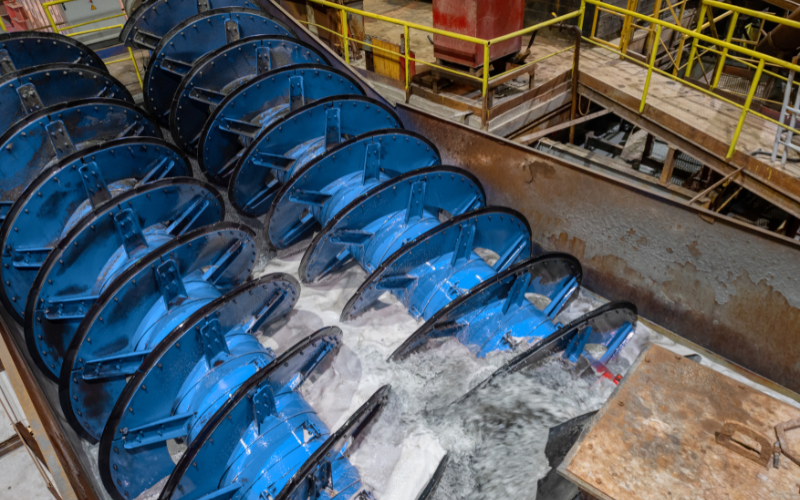
What Is Wet Blue Leather?
Wet Blue refers to leather that has been tanned using chromium salts, resulting in a characteristic bluish-gray color.
This is the most widely used tanning method globally, especially in industrial leather production where durability and downstream processability are critical.
Key Characteristics
-
Bluish-gray color (“blue”) caused by the reaction between hide fibers and chromium
-
Moist, supple leather with a stable internal structure and good formability
-
High water resistance and strong mechanical durability
Applications
-
Upholstery leather for interiors and automotive use
-
A base material for further processes such as dyeing, buffing, polishing, and surface finishing
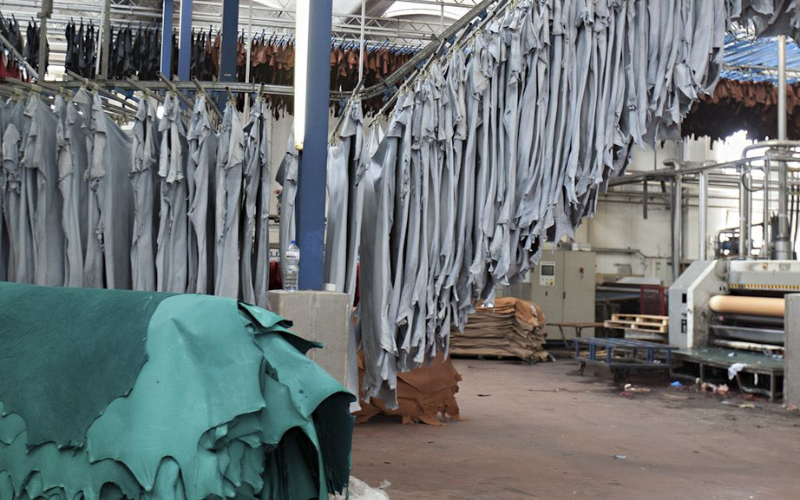
What Is Wet White Leather?
Wet White is leather that has been tanned without the use of chromium.
Instead, tanning agents such as glutaraldehyde, syntans, oxazolidines, or vegetable tannins are applied. After tanning, the leather appears off-white to pale yellow, with a soft handfeel and excellent elasticity.
Key Characteristics
- White or ivory-toned color (“white”)
- Softer texture, lower odor, and more skin-friendly properties
- Ideal for products requiring refined touch and light, delicate colors
Applications
- High-end fashion, handmade bags and wallets
- Light-toned interior upholstery, automotive leather, and lounge seating
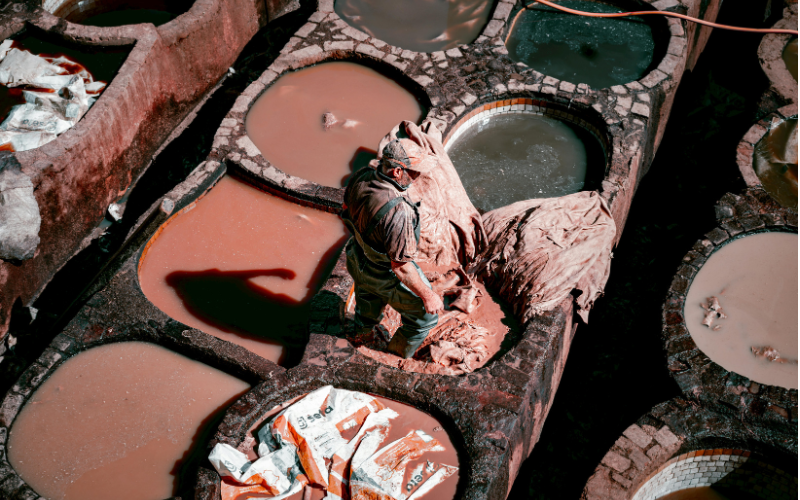
The Role of Wet Blue and Wet White in the Leather Value Chain
Within the leather value chain, the Wet Blue and Wet White stages play a foundational role, marking the transformation from raw hide to semi-finished leather.
This is a critical phase that determines:
-
Structural stability
-
Compatibility with subsequent processing
-
Material consistency before dyeing, embossing, or surface finishing
Once leather reaches the Wet Blue or Wet White stage, it can be stored, distributed, or transported to finishing tanneries for further processing according to the final design direction.
This stage not only affects production efficiency, but also directly influences final product quality, including durability, color performance, and tactile experience.
Thanks to their intermediate and highly flexible nature, Wet Blue and Wet White act as essential links between raw materials and finished leather products—serving diverse sectors such as interiors, fashion, accessories, automotive, and high-end artisanal craftsmanship.
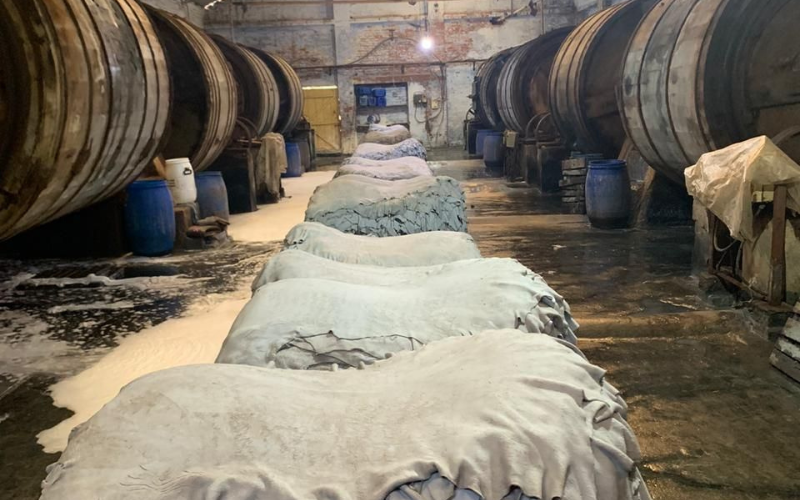
Conclusion
-
Wet Blue and Wet White are two foundational tanning stages widely used in the leather industry
-
Each offers distinct advantages, suited to different production and design requirements
-
Understanding their characteristics and applications helps designers, manufacturers, and buyers select the right leather base for interior, fashion, or premium handcrafted products