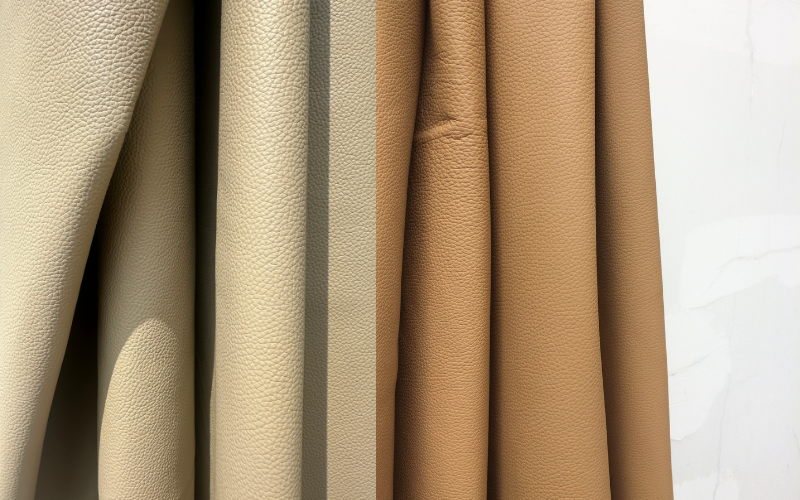
Misconception #1: “Italian leather is always extremely expensive”
The truth:
Italian leather spans multiple price segments—from standard to premium to luxury. Pricing varies based on:
-
Type of finish:
-
Aniline (most natural, premium)
-
Semi-aniline (balanced performance)
-
Pigmented / Protected (stable, easy maintenance)
-
Rarity & processing: Nubuck, pull-up, special surface effects
-
Hide size & color consistency
How to choose correctly
Real-world examples
-
Hotel lobby: Semi-aniline sofas → elegant, durable, cost-efficient
-
Penthouse: Aniline camel armchair as a focal piece → maximum impact with controlled budget
GreenMoss recommendation:
Adopt a “mix & match” strategy
→ 70–80% semi-aniline + 20–30% aniline or nubuck accents
This approach balances budget control with refined aesthetics.
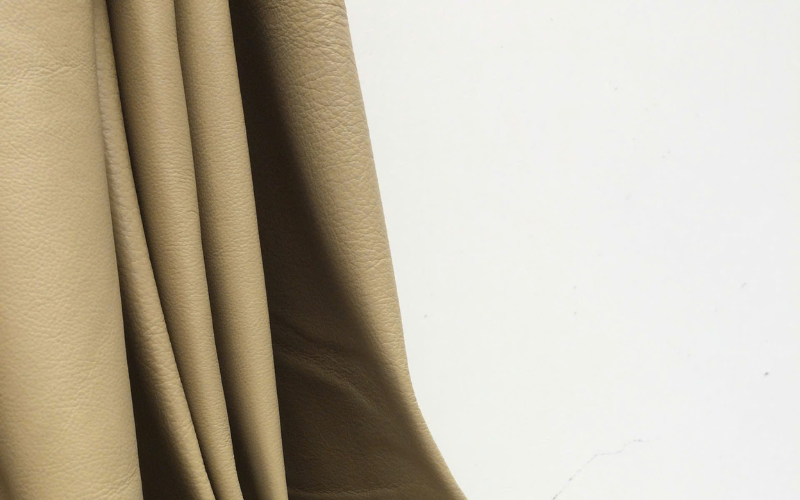
Misconception #2: “Italian leather is hard to maintain and impractical”
The truth:
Maintenance requirements differ significantly by leather type:
-
Aniline: Most natural, develops patina, more sensitive to stains
-
Semi-aniline: Thin protective layer, improved stain resistance, premium handfeel
-
Pigmented / Protected: High color stability, easy cleaning, ideal for hospitality & F&B
Choosing by space
-
Family living rooms (kids / pets): Semi-aniline or pigmented
-
Bars & restaurants: Pigmented (oil & beverage resistance)
-
Master bedrooms / studies: Aniline or nubuck (low stain risk, high sensory value)
60-second maintenance checklist
-
Avoid direct sunlight; maintain humidity at 40–60%
-
Weekly dusting with soft cloth
-
Clean stains with pH-neutral products
-
Nubuck: soft brushing + periodic waterproofing
-
Conditioning every 6–12 months (depending on leather type)
GreenMoss recommendation:
Each leather collection includes tailored care guidelines and optional care kits.
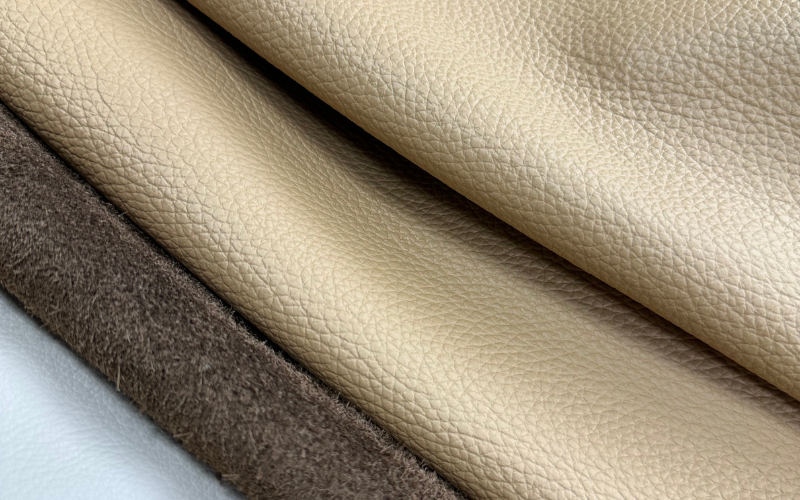
Misconception #3: “Italian leather is less durable than PU or microfiber”
The truth:
-
Genuine leather offers long service life and develops beautiful patina over time
-
Synthetic materials (PU, microfiber) may offer lower initial cost and color uniformity, but often peel or crack after several years, especially under heavy use
Lifecycle-based selection
Examples
GreenMoss recommendation:
Evaluate TCO (Total Cost of Ownership): initial cost + maintenance + replacement.
High-quality leather often wins in premium projects.
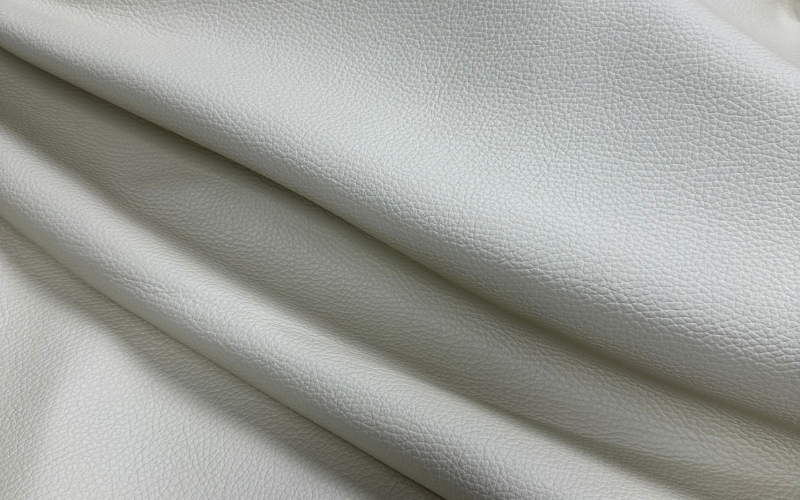
Misconception #4: “All Italian leather is the same”
The truth:
Italian leather varies widely in structure and finish:
-
Grain structure: Full-grain / Top-grain / Corrected-grain
-
Finish types: Aniline / Semi-aniline / Nubuck / Pigmented
-
Special effects: Pull-up, oily touch, two-tone, ombré
Choosing by experience
-
Natural touch & breathable color: Aniline / Nubuck
-
Beauty + durability + easy care: Semi-aniline (main areas), Pigmented (high-risk zones)
-
Artistic or bespoke accents: Pull-up or two-tone finishes
Smart combination example
-
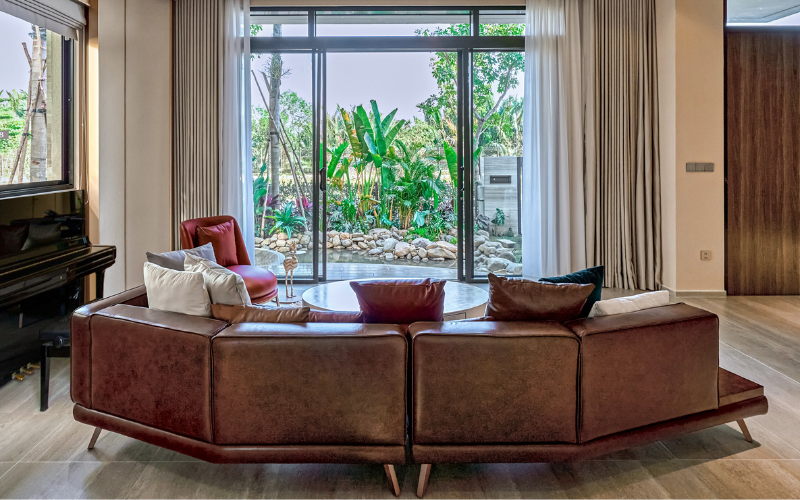
Main sofa: Semi-aniline taupe
-
Accent chair: Aniline camel
-
Dining chairs: Pigmented leather
GreenMoss recommendation:
Use scenario-based sample sets (residential / hospitality / office) for faster decision-making.

Misconception #5: “Italian leather is only for luxury, not practical projects”
The truth: Italian leather is highly versatile and widely used across sectors:
-
Hospitality: Lobby seating, F&B booths, headboards
-
High-end residential: Sofas, armchairs, wall panels
-
Grade-A offices: Executive chairs, reception lounges
-
Fashion & accessories: Bags, wallets, decorative objects
How to select effectively
Real-world scenarios
-
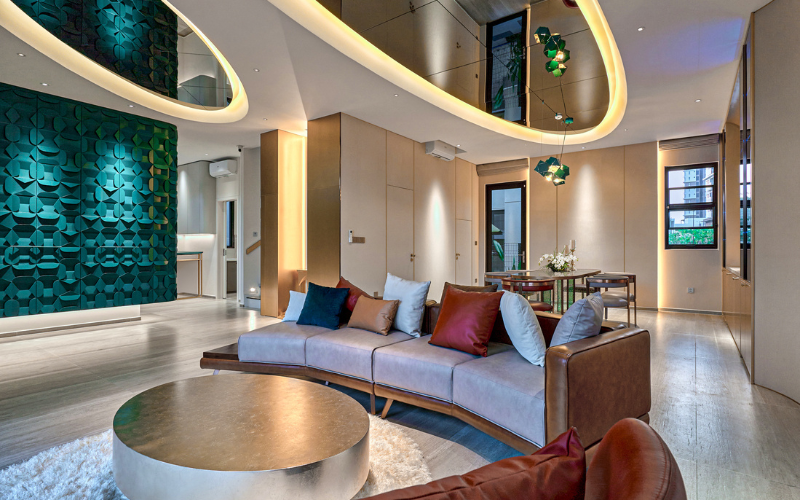
Coastal resort: Earth tones (sand beige, terracotta) + semi-aniline/pigmented
-
Urban penthouse: Neutral palette (beige/taupe) with aniline burgundy or navy accents
GreenMoss recommendation:
Develop material boards (leather, wood, metal, stone) aligned with the project concept to accelerate approvals.
3-Step Guide to Choosing the Right Italian Leather
-
Define function & usage frequency (residential, hospitality, F&B, office)
-
Select leather type based on tactile feel ↔ stain resistance ↔ maintenance
-
Align color palette (Neutral / Earth / Bold) + certification requirements (CO/CQ, FR)
Quick FAQ
Q1: Is aniline leather always impractical?
A: No. It suits low-risk spaces and users who appreciate patina. For families, semi-aniline is safer.
Q2: Should nubuck be used for main sofas?
A: Yes—with proper care. Otherwise, use nubuck for accent seating and semi-aniline for main sofas.
Q3: How to verify genuine Italian leather?
A: Request CO/CQ, official import documentation, LWG-certified tanneries, and inspect grain, scent, and batch consistency.
GreenMoss – Your Italian Leather Solution Partner
-
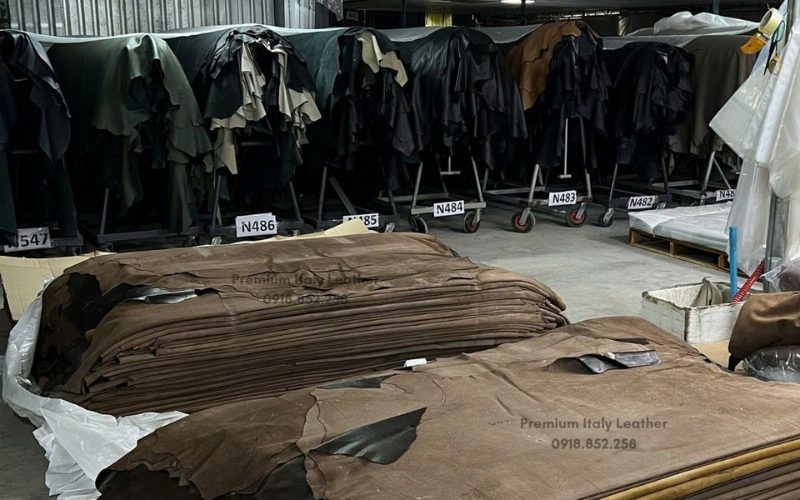
2,000+ Italian leather SKUs across finishes & effects
-
1,000,000+ sqft in stock
-
Nationwide delivery within 24–48 hours
-
Full CO/CQ documentation & project-standard consulting
-
“Leather Library” positioning: knowledge-driven material optimization
Conclusion
“Italian leather” does not automatically mean expensive, difficult, or fragile.
The key lies in choosing the right leather for the right function, understanding its characteristics, and maintaining it properly.
GreenMoss supports you from material selection and color coordination to documentation and aftercare—ensuring both aesthetic excellence and operational performance for your project.
Contact GreenMoss to receive sample kits and professional consultation for your residential, hospitality, or office project.