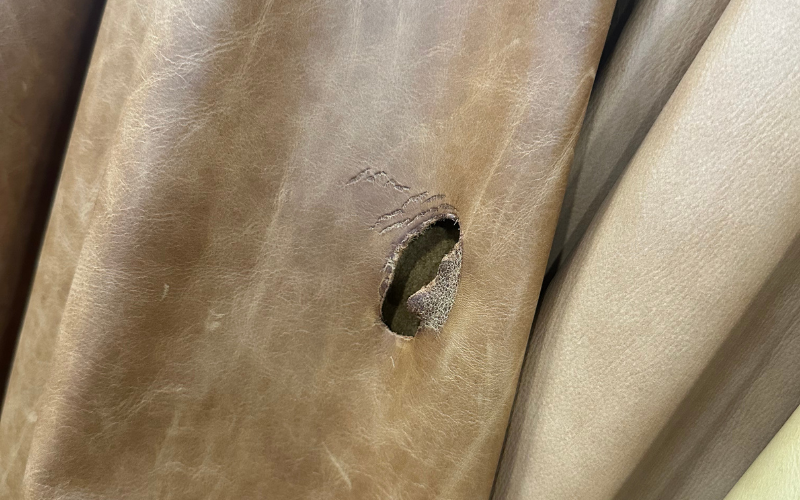
These are not defects, but authentic marks—evidence of natural origin and genuine material value.
“A beautiful hide is not one without marks, but one that tells the story of nature.”
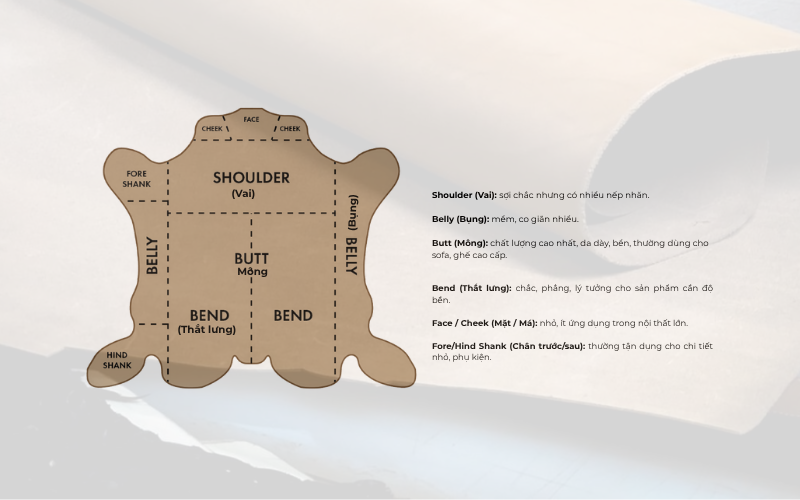
2. The technical structure of a leather hide – from neck to belly
A standard Italian cowhide typically measures
45–55 square feet, divided into several zones, each with different mechanical and aesthetic qualities:
| Leather Zone | Technical Characteristics | Recommended Applications |
|---|
| Neck |
Dense fibers, visible wrinkles, low elasticity |
Low-stress areas: wall panels, decorative details |
| Shoulder |
Good elasticity, attractive grain, develops patina well |
Sofas, armchairs, luxury wall upholstery |
| Bend / Loin (Back) |
Tight fiber structure, highest durability |
Load-bearing surfaces: seat cushions, armrests |
| Flank |
Softer leather, higher stretch |
Cushions, trims, secondary components |
| Belly |
Very soft, high stretch, uneven grain |
Curved elements, edges, soft decorative areas |
Technical notes:
-
The bend/loin area is always prioritized for primary seating surfaces due to its high collagen density and strength.
-
Softer zones such as the belly are best used in non-load-bearing areas to avoid deformation over time.
Understanding this “technical map” allows architects and manufacturers to optimize cutting layouts, minimize waste, and ensure consistency in color, grain, and texture across finished products.
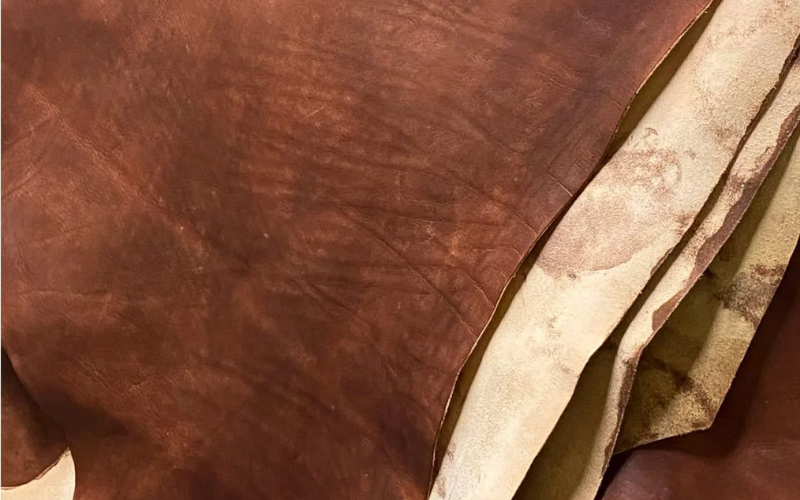
3. Natural marks as proof of authenticity
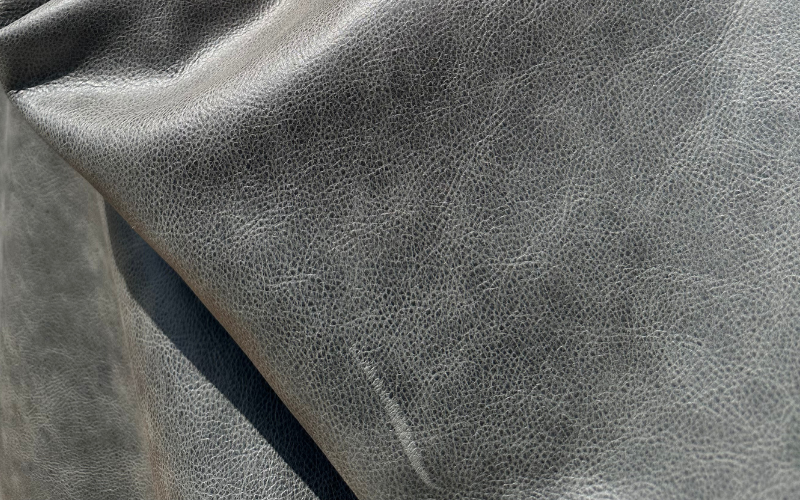
During leather selection, characteristics such as:
-
Healed scars
-
Vein lines
-
Insect bites
-
Grain variations
are recognized as signatures of genuine leather.
Unlike artificial materials that are perfectly uniform, the natural irregularity of real leather defines its value.
High-end interior designers appreciate these features because they:
-
Create a natural, human connection
-
Produce one-of-a-kind surfaces—no two pieces are identical
-
Support the philosophy of authentic luxury, where sophistication comes from truth, not artificial perfection
“Leather, like people, is most beautiful when it is allowed to be itself.”
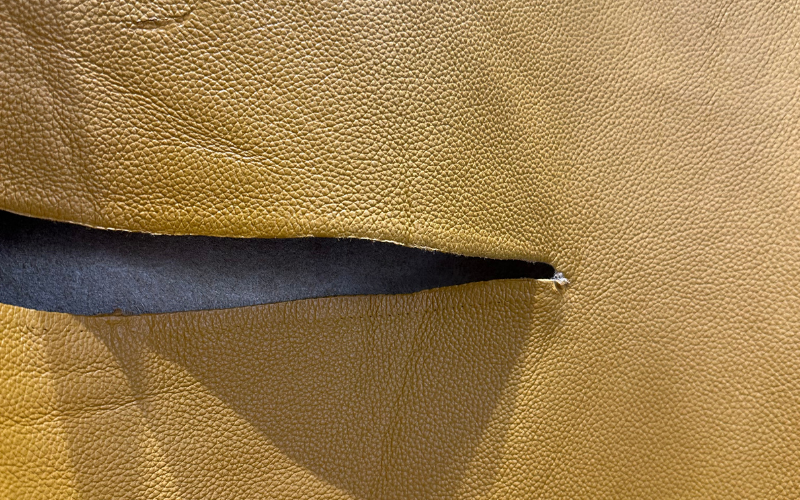
4. Why understanding the technical map reduces waste and enhances design value
In furniture manufacturing—sofas, armchairs, headboards—each component requires a different leather quality:
-
Seat cushions: dense, durable zones (bend/loin)
-
Backrests and side panels: shoulder or flank
-
Curved or flexible areas: belly zones
A properly planned cutting layout can reduce material waste by 8–12% on average compared to random cutting.
For large-scale projects, this translates into:
-
Reduced natural resource waste
-
Optimized production and labor costs
-
Consistent aesthetic quality across the entire collection
At GreenMoss, our technical team advises on cutting plans tailored to each product type and leather grade, ensuring clients maximize the value of every square foot of leather.
5. GreenMoss – Your comprehensive material solutions partner
GreenMoss goes beyond importing and distributing premium Italian leather. We work alongside architects, designers, and manufacturers throughout the entire process:
-
Advising on the right leather type: Aniline, Semi-Aniline, Pigmented, Corrected Grain
-
Training teams to recognize leather zones and technical cutting layouts
-
Supporting quality control and material grading at factory level
-
Providing European-standard color palettes and sample boards
This holistic approach positions GreenMoss as a trusted Material Solutions Partner for high-end interior brands and production studios in Vietnam.
From raw hide to finished product—every step is a collaboration between craftsmanship and material intelligence.