
A Ten-Year Journey to Erect the Bạch Đằng Monument on the Pedestrian Street
A Sculpture at the Heart of the City – When Memory Endures Without Names
Ho Chi Minh City, April 2025.
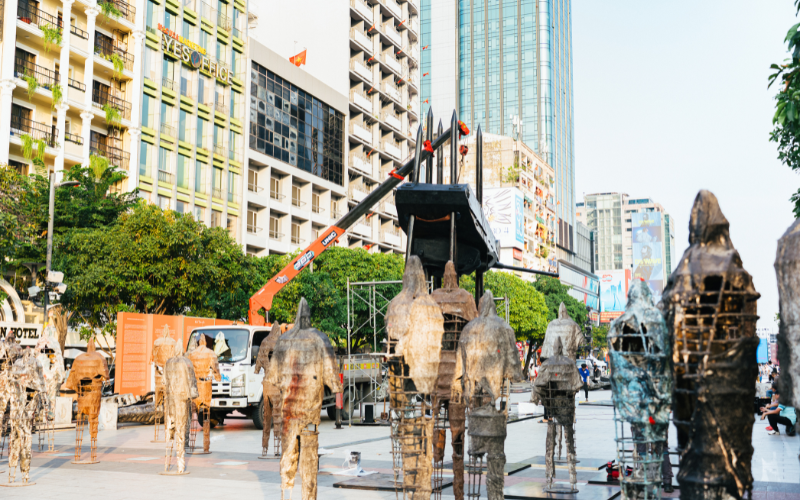
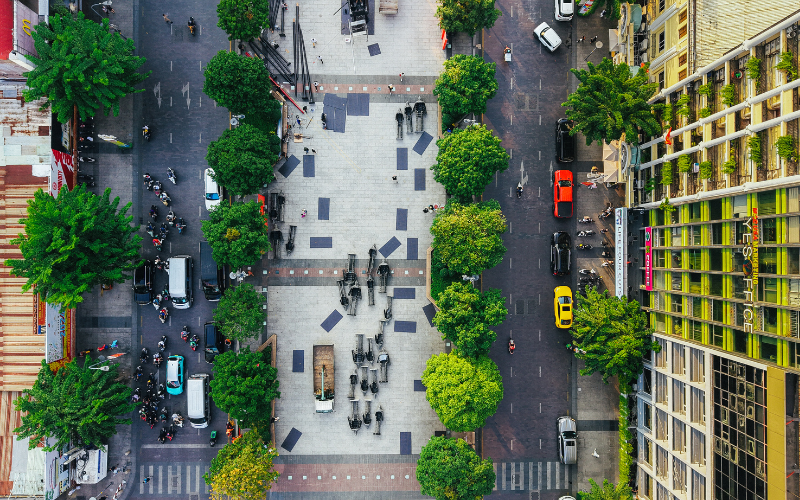
At the heart of Nguyễn Huệ Pedestrian Street—an avenue emblematic of the city’s contemporary rhythm and commercial vitality—a nearly 30-meter-long sculptural installation quietly emerged.
No title plaque. No grand introduction.
Only bronze figures—barefoot, leaving imprints on the ground—moving forward in silence.
Yet for two weeks, millions paused before the work. Not drawn by spectacle, but by the stillness that awakened something profound within the collective memory.
Ten Years – An Idea That Survived Oblivion
The installation exhibition “From the Victory of Bạch Đằng to the Great Victory of April 30, 1975” by artist Lê Hữu Hiếu was far from a spontaneous breakthrough.
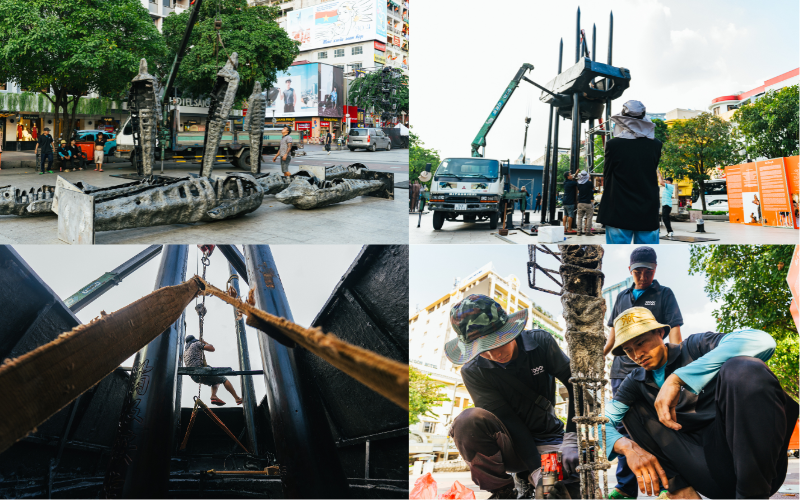
Behind it lay a journey spanning more than a decade—marked by repeated moments when abandonment seemed inevitable.
When a Pedestrian Street Becomes a Place of Remembrance
Officially unveiled in April 2025, on the occasion of the 50th anniversary of national reunification, the exhibition chose a space filled with challenges: Nguyễn Huệ Pedestrian Street—a place typically reserved for bright lights, loud music, and entertainment-driven events.
Yet it was precisely here that the silent mass of sculptures resonated most powerfully.
There were no barriers. No elevated pedestals.
Visitors walked among the bronze figures, sensing every scratch, every gaze, every fold of clothing.
Children reached out with curiosity, touching the feet of the statues.
Elderly viewers grew teary-eyed, recognizing images of fathers who once served as naval soldiers.
Young people paused, quietly reading the small notes printed on the accompanying panels.
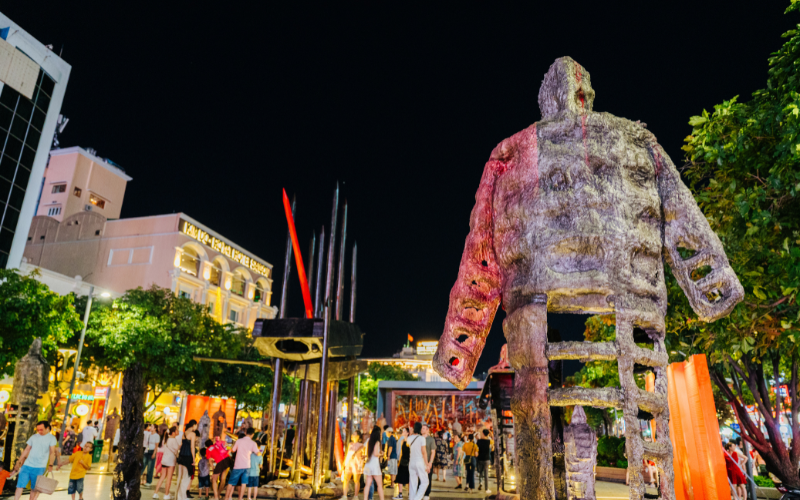
The exhibition’s impact did not stem from an extensive promotional campaign, but from photographs taken and shared by the public themselves.
Within just three days, thousands of social media posts appeared—capturing the moment of “people walking among people.”
Ocula magazine (Australia) described the work as
“a sculptural mass that carries historical weight, yet walks seamlessly within everyday life.”
Many local critics have since regarded it as one of the most memorable public art projects in contemporary Vietnamese history.
Sponsoring Art – A Courageous Choice
As the principal sponsor, GreenMoss Leather—a premium Italian leather supplier in Vietnam—chose not to appear through banners or prominent branding at the exhibition. We believe that a work like this requires no additional sound beyond the footsteps of the public themselves.
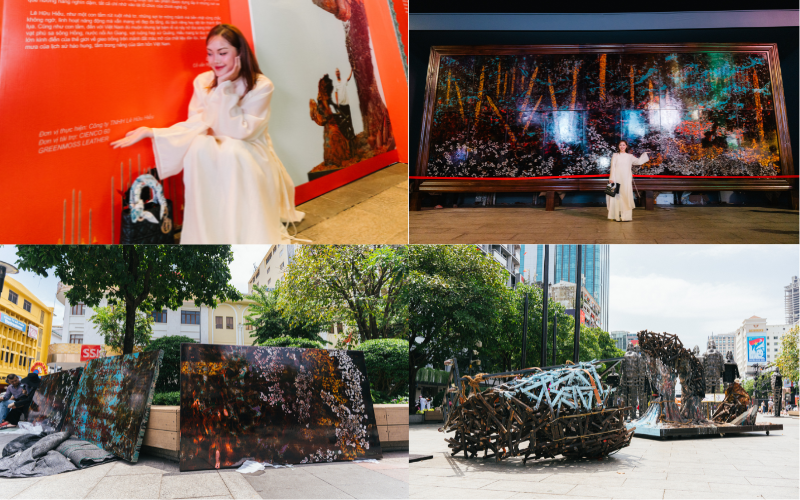
As a company operating in the interior materials sector, GreenMoss understands the value of accompanying artists in creating “materials of memory”—elements that cannot be measured by thickness, color, or technical specifications, yet profoundly shape the aesthetic sensibility of a community.
We chose to sponsor this project not for commercial gain or viral visibility, but because it offered a rare opportunity to witness national memory being sculpted through art, within the living fabric of an urban space.
More importantly, we believe that every bold step taken by art today lays the foundation for a more enduring aesthetic in the design and creative works of tomorrow.
When Art Becomes Part of Living Space
The exhibition concluded after two weeks, but the bronze figures did not vanish.
Its resonance—lingering through photographs, conversations, and messages such as “Thank you for creating a Bạch Đằng for our generation”—continues to spread.
GreenMoss is proud to have been part of this journey.
Because to us, building a brand is not merely about supplying products—it is about contributing to the shaping of identity, through lines, spaces, and those silent moments that gently touch collective memory.