
- Why can the same color feel different on leather surfaces?
- 1. What is Roll Coating?
-
- Technical characteristics
- The finish is built up through multiple thin layers Allows precise control of color gradients Flexible for small batch color adjustments Suitable for achieving a more natural visual effect
- Effect on material feel
- Typical applications
- Aniline leather finishing adjustments Nubuck and suede coloration Leather requiring tonal variation High-end furniture products
- 3. Direct Comparison: Roll Coating vs Spray Finishing
- 7. Perspective for architects and interior designers
Why can the same color feel different on leather surfaces?
In genuine leather production, color is not determined solely by dyes or pigments. It is also strongly influenced by how the finishing layer is applied onto the grain surface.
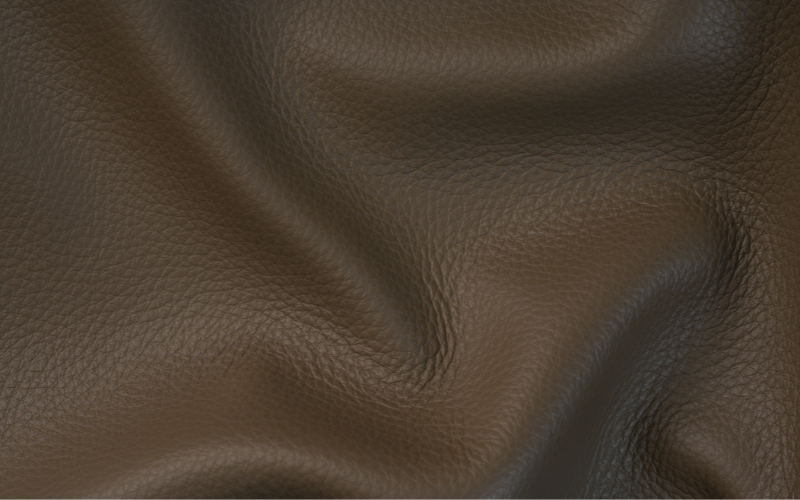
Two of the most commonly used finishing techniques in upholstery leather manufacturing are roll coating and spray finishing.
Both methods can produce the same color tone; however, the visual depth, grain clarity, and handfeel can differ significantly.
For high-end interior projects, these differences directly influence:
- Long-term material perception
- The way light interacts with the surface
- The natural appearance of the grain
- Consistency between hides within the same batch
1. What is Roll Coating?
Roll coating is a finishing method in which the finishing layer is applied to the leather surface using an engraved roller.Finishing materials (resins, pigments, binders, etc.) are transferred from the roller to the leather surface as the hide passes through the coating system.
Technical characteristics
- The amount of finish is controlled by the engraving depth of the roller
- Coating thickness is relatively uniform
- Suitable for large-scale production with high repeatability
- Can create subtle shading or mild two-tone effects
Effect on grain surface
Because the finishing layer is transferred through direct contact:- Grain structure tends to remain clearly visible
- The finish layer is typically thin and even
- Visual depth is stable
- High consistency between hides
- Semi-aniline leather
- Pigmented leather requiring color consistency
- Contract upholstery
- Automotive leather


Spray finishing is a technique where the finishing layer is applied using automatic or manual spray guns.
The leather passes through a spray booth where the coating material is dispersed into very fine atomized droplets.

Technical characteristics
- The finish is built up through multiple thin layers
- Allows precise control of color gradients
- Flexible for small batch color adjustments
- Suitable for achieving a more natural visual effect
Effect on material feel
Because the finish is formed by multiple thin layers:
- Grain tends to appear softer
- Color often shows greater visual depth
- Subtle tonal variation can be achieved
- Handfeel may appear more natural depending on resin formulation
Typical applications
- Aniline leather finishing adjustments
- Nubuck and suede coloration
- Leather requiring tonal variation
- High-end furniture products

3. Direct Comparison: Roll Coating vs Spray Finishing
| Criteria | Roll Coating | Spray Finishing |
|---|---|---|
| Color consistency | Very high | High |
| Visual depth | Stable | Deeper |
| Grain visibility | Clear and consistent | Softer and more natural |
| Batch repeatability | Excellent | Good |
| Shading effect | Subtle | Flexible |
| Handfeel | Stable | Potentially more natural |
| Suitability for large production | Highly suitable | Suitable |
| Color adjustment flexibility | Moderate | Flexible |
4. Visual depth & grain clarity: key factors in interior applications
Within interior spaces, natural and artificial lighting interact differently with leather surfaces.
Roll coating typically creates:
- A stable surface appearance
- Uniform color distribution
- A clean and minimal aesthetic
Spray finishing typically creates:
- A subtle sense of depth
- A visually softer material expression
- A more natural visual impression
This explains why the same taupe or brown tone can create completely different spatial impressions.
5. Roll coating and spray finishing do not define leather quality
A common misconception is:
spray finish = higher quality
In reality:
High-end Italian tanneries widely use both methods.
The difference lies in:
- Material design objectives
- Required color stability
- Final application requirements
For example:
- Contract sofas often prioritize roll coating to ensure consistency
- High-end lounge chairs may prioritize spray finishing to preserve visual softness
6. Impact on durability
Durability does not depend solely on the finishing method, but also on:
- Polymer binder formulation
- Finish film thickness
- Degree of crosslinking
- Pressing and drying processes
Roll coating typically:
- Provides good control of film thickness
- Performs well in high-traffic environments
Spray finishing:
- Allows flexible adjustment of layer build-up
- Can achieve comparable durability when properly controlled
7. Perspective for architects and interior designers
When selecting leather, beyond color, it is important to observe:- Grain clarity
- Light reflection behavior
- Surface feel when touched
- Consistency between hides
- visual calm → roll coating
- visual depth → spray finishing
Semi-aniline leather often combines:
- impregnation layer
- light roll coating
- spray adjustment
This helps maintain visible grain while ensuring color stability.Pigmented leather is often used:
- roll coating to build the base color
- spray finishing to fine-tune tone
This approach balances durability and aesthetics.
9. Conclusion
Roll coating and spray finishing are not different levels of quality, but rather two technical approaches used to achieve different aesthetic and performance objectives. Understanding these differences helps:
- Select materials aligned with interior design concepts
- maintain consistency between production batches
- anticipate how the material will behave over time
References:
JBS Couros
Leather Working Group
International School of Tanning Technology