
- 2. What Is Material Intelligence?
- 3. Four Key Factors When Choosing Interior Materials
- 4. Material Comparison: Leather, Fabric, PU, and Microfiber
- 5. Choosing Materials Based on Real Applications
- 6. How Vietnam’s Climate Affects Interior Materials
- 7. Common Mistakes When Choosing Materials
- 8. A Five-Step Framework for Choosing the Right Material
- 9. Conclusion: Materials Define How You Live in a Space
1. Materials Are Not Just Surfaces - They Shape How a Space Is Lived In
In interior design, many people begin with colour, form, or style.
In reality, however, material is what determines how a space is experienced every day.
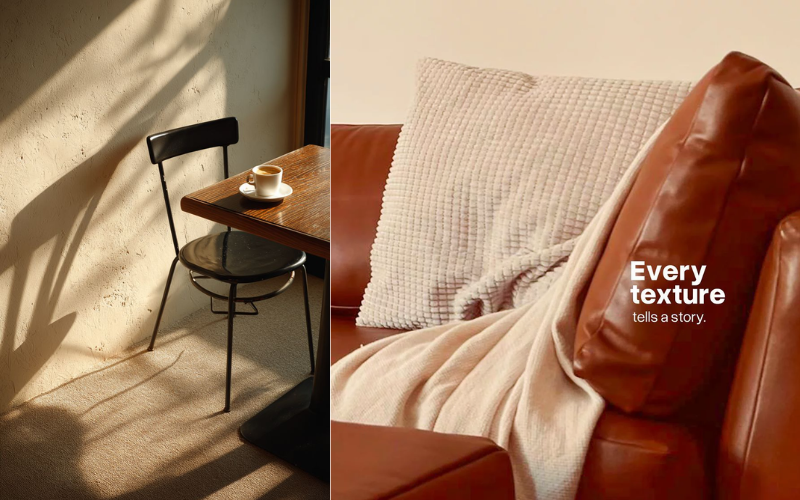
Two sofas may look almost identical at first glance. But once you touch them, sit on them, and use them for two or three years, the experience can be completely different if the materials are different.
This is why the concept of Material Intelligence has become increasingly important in contemporary design.
2. What Is Material Intelligence?
Material Intelligence is the ability to understand and select materials based on multiple layers of value, not aesthetics alone.
A good material should not only look beautiful at the beginning. It should be evaluated through four key dimensions:
• Physical
Durability, load resistance, abrasion resistance, and structural stability.
• Sensory
How the material feels to the touch, including handfeel, surface temperature, softness, dryness, and overall tactile comfort.
• Environmental
VOCs emissions and their impact on indoor air quality.
• Contextual
How well the material fits the space, lifestyle habits, usage frequency, and climate.
→ A good material decision is the result of balancing all four dimensions.
3. Four Key Factors When Choosing Interior Materials
3.1. Durability | Long-Term Performance
Durability is a fundamental factor, but it is often misunderstood.
A material is not necessarily durable just because it feels hard. Likewise, softness does not automatically mean weakness.
For example:
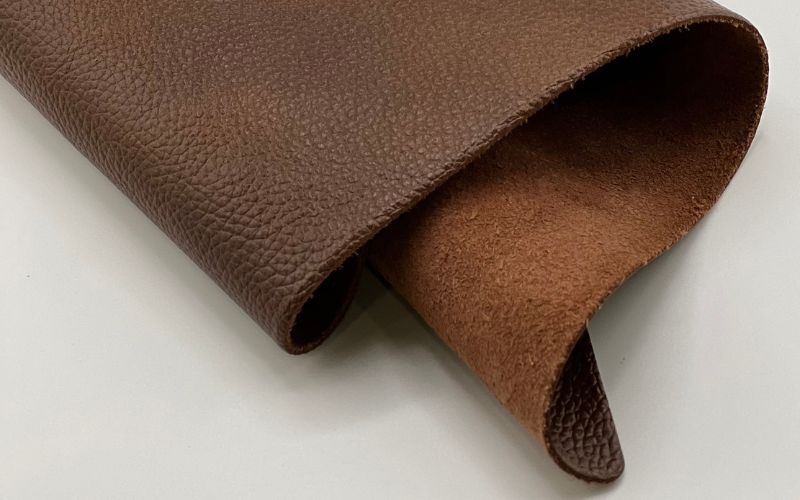
- Genuine leather has a natural collagen structure, allowing it to withstand pressure, bending, and repeated use.
- PU synthetic leather may crack after long-term use.
- Fabric can wear down through friction and repeated contact.
Common technical indicators include:
- Abrasion resistance
- Flex endurance
- Finish adhesion
3.2. Tactile Experience | The Experience of Touch
This is an invisible factor, yet it has a direct impact on how users emotionally connect with a space.
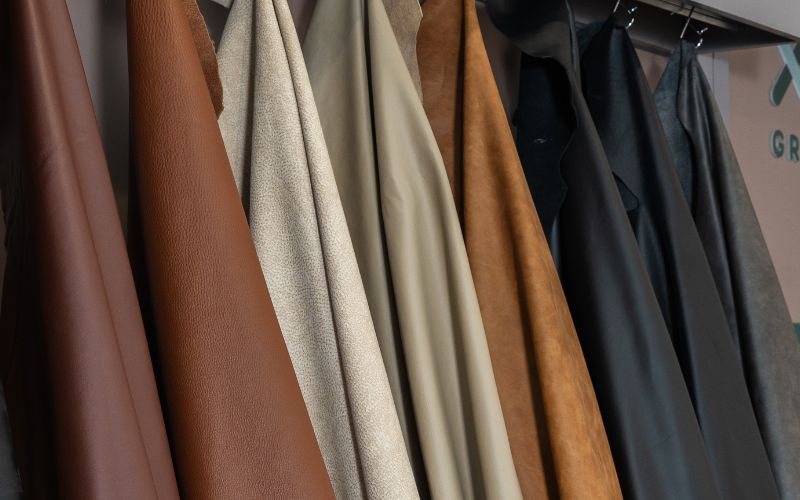
Different types of leather create different tactile experiences:
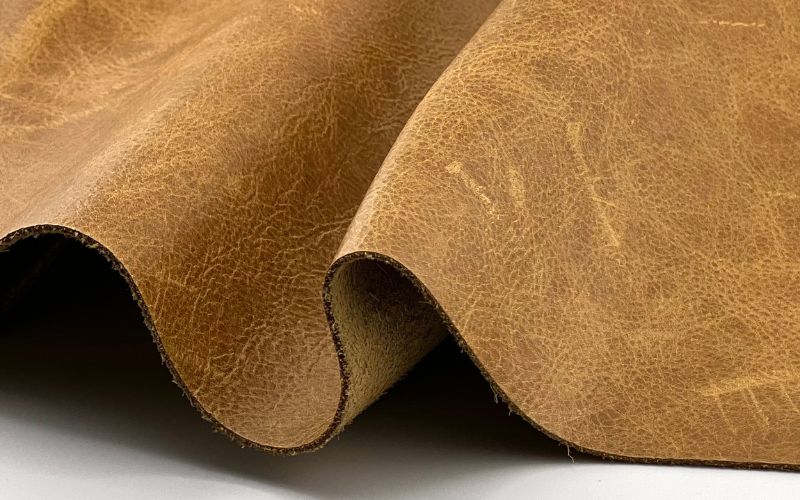
- Aniline leather → feels soft, warm, and natural.
- Semi-Aniline leather → balances natural character with surface control.
- Pigmented leather → more stable and uniform surface.
An important concept:
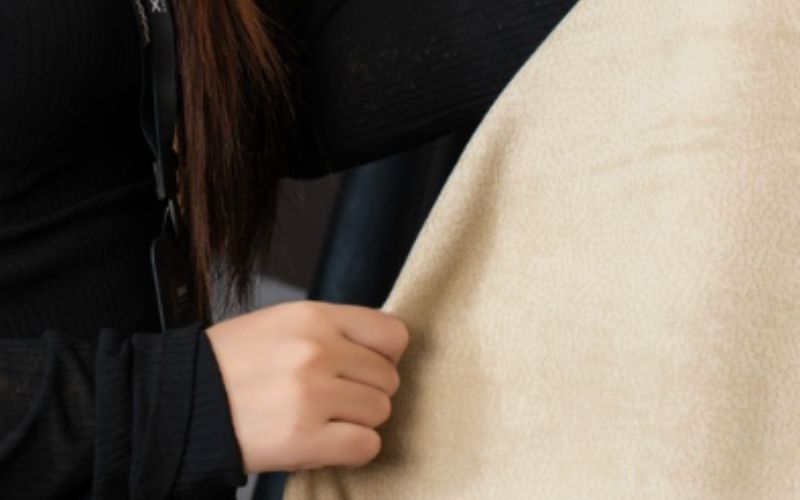
Tactile memory - the body remembers how a material feels, and that memory helps create a stronger connection with the space.
3.3. Environmental Impact
Environmental impact has become an increasingly important consideration in modern interiors.
Some materials may emit VOCs (Volatile Organic Compounds), which can affect indoor air quality.
According to the World Health Organization, VOCs are a group of compounds that may affect the respiratory system and long-term health when exposure exceeds safe levels.
In interior applications:
- Engineered wood may contain formaldehyde.
- Adhesives and paints are common sources of VOC emissions.
- Certified leather, such as leather meeting REACH or LWG standards, allows for better chemical control.
→ Choosing materials is therefore not only an aesthetic decision. It is also a decision related to health and indoor living quality.
3.4. Aging & Patina | How Materials Change Over Time
This is one of the biggest differences between materials.
- Genuine leather: develops patina and can become more beautiful over time.
- PU: may peel, crack, or deteriorate.
- Fabric: may fade, pill, or lose its original surface quality.
A high-end space should not only look good when it is newly completed. It should also retain its value after years of use.
4. Material Comparison: Leather, Fabric, PU, and Microfiber
| Criteria | Genuine Leather | Fabric | PU | Microfiber |
|---|---|---|---|---|
| Material structure | Natural collagen fibres | Woven fibres | Coated polymer | Ultra-fine synthetic fibres |
| Mechanical durability | High (if properly finished) | Medium | Low to medium | Medium to fairly good |
| Aging behaviour | Develops a natural patina over time | Fades/ pills | Cracks or peels over time | Stable, with little change |
| Handfeel | Organic, with strong depth | Soft, depending on the weave | Flat, with less depth | Fairly soft and uniform |
| Stain resistance | Medium (lower for Aniline) | Low (absorbs easily) | High | Medium |
| Maintenance | Easy when the material is understood | Difficult (deep absorption) | Easy to wipe on the surface | Medium |
| Long-term aesthetics | Gains character and value | Gradually declines | Declines significantly | Remains stable |
| Suitable applications | High-end interiors, hospitality | Casual and residential spaces | Mid-priced, short-term use | Mid-range interiors |
There is no single “best” material. There is only the material that best fits the intended use.
5. Choosing Materials Based on Real Applications
Residential Spaces
- Priority: comfort, tactile experience, and long-term durability.
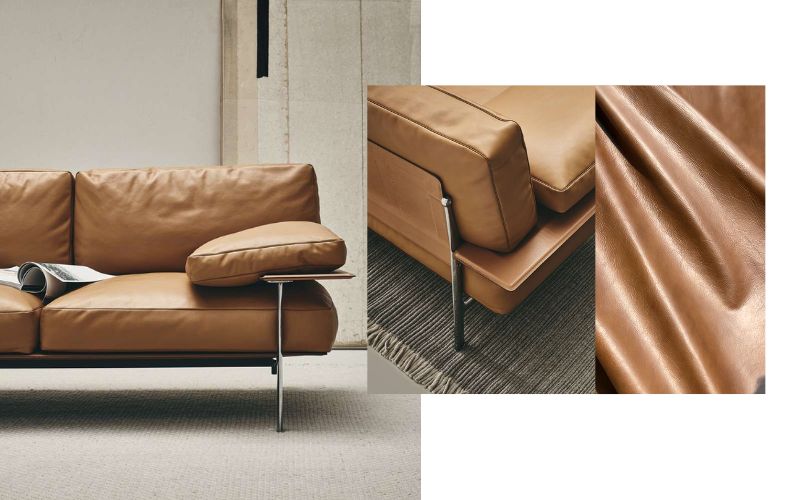
- Suggested materials: Semi-Aniline leather or Pigmented leather.
Hospitality Spaces
- Priority: high traffic resistance and easy maintenance.
- Suggested material: Pigmented leather.
Workspaces
-
Priority: stability, durability, and minimal surface change over time.
-
Suggested materials: neutral, high-performance materials with strong durability.
6. How Vietnam’s Climate Affects Interior Materials
Vietnam’s climate is characterised by:
- High humidity
- Temperature fluctuations
- Strong sunlight
These conditions affect materials in different ways:
- Fabric can be more prone to moisture and mold.
- PU may crack when exposed to temperature changes over time.
- Genuine leather can remain more stable when properly processed and finished.
→ This is an important factor, yet it is often overlooked when selecting interior materials.
7. Common Mistakes When Choosing Materials
- Choose by colour rather than function
- Confuse softness with durability
- Do not understand how the material ages
- Overlook environmental factors
- Ignore usage frequency
8. A Five-Step Framework for Choosing the Right Material
- Define the usage level (low/ medium/ high traffic)
- Identify the desired feel (soft/ structured)
- Assess maintenance requirements.
- Consider environmental conditions (humidity, heat, and sunlight)
- Select the material that best fits the intended application.
9. Conclusion: Materials Define How You Live in a Space
A space is not only seen. It is experienced every day.
Material is the direct point of contact between people and the spaces they live in.
GreenMoss provides premium leather materials and supports clients in choosing the right material for the right application. Visit the GreenMoss showroom to experience the difference that material quality can make.