2. When Light Interacts with Leather Structure – The Science of Emotion
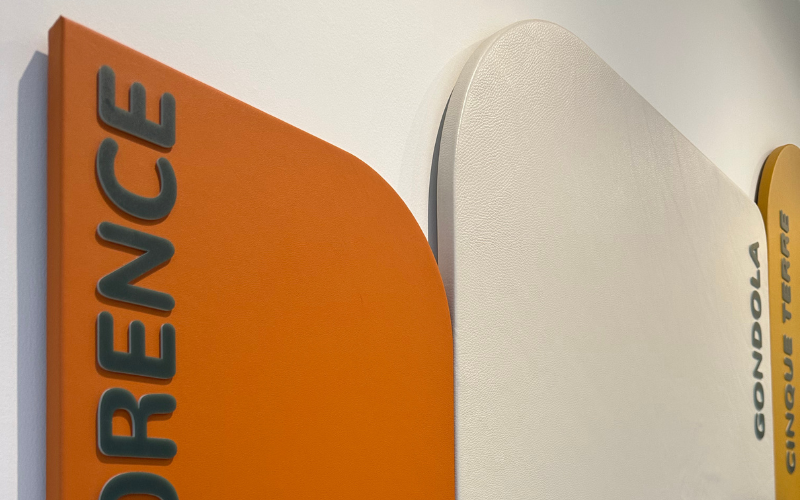
Unlike synthetic materials with uniform light reflection, genuine leather has an irregular micro-fiber structure.
This very “imperfection” is what creates its vitality.
-
Aniline leather: With no protective topcoat, light penetrates the dye layer and reflects back through collagen fibers, producing a soft, diffused glow.
-
Semi-aniline leather: A thin protective layer creates a more even reflection—refined and stable, with slightly less depth but better color durability.
-
Pigmented / corrected-grain leather: Reflects more surface light, delivering a clean and crisp appearance ideal for modern interiors.
At a microscopic level, light striking genuine leather fractures into multiple reflective layers, giving leather visual depth rather than the flatness typical of synthetic surfaces.
This phenomenon causes light to glide differently across leather throughout the day, creating a sense of movement, life, and non-repetition.
3. Lighting Design for Leather – The Art of Balance
Light can either elevate or diminish the beauty of leather, depending on how it is used.
Natural light
-
Morning: Soft, diffused light highlights supple leather folds—ideal for light tones such as Champagne or Sand Beige.
-
Afternoon: Angled light creates deeper shadows, perfect for patinated or darker tones like Bistre Terra or Olive.
-
Evening: Artificial lighting becomes the main “director,” requiring careful color temperature selection to maintain authenticity.
Artificial light
-
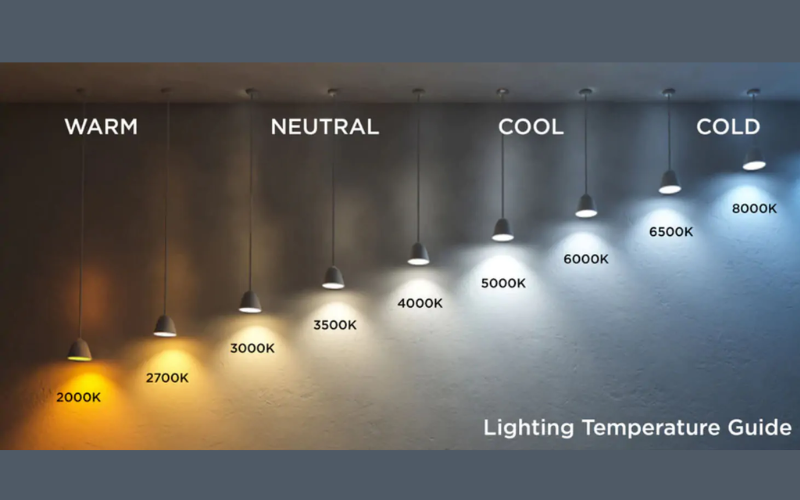
3000K (warm white): Enhances warmth, softness, and relaxation.
-
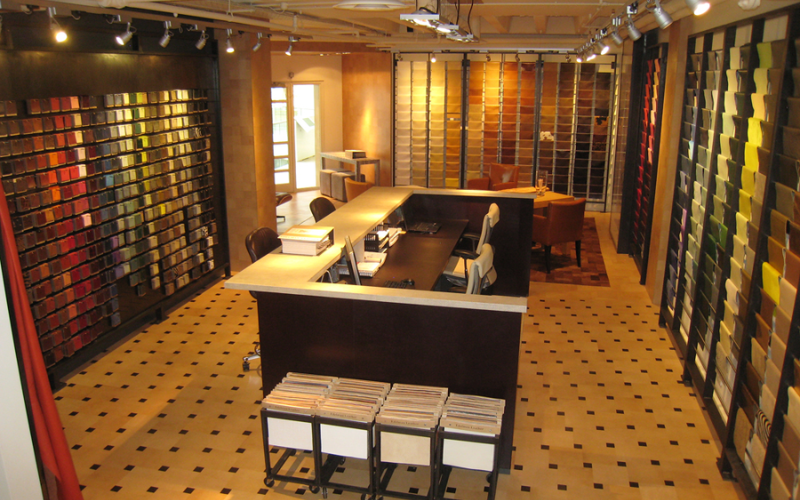
3500–4000K: Neutral balance that clearly reveals leather structure—commonly used in showrooms.
-
5000K and above: Best avoided for genuine leather, as overly cool light strips away depth and makes leather appear “plastic.”
Italian architects often describe this balance as “light harmony”—the equilibrium between illumination and material sensibility, between vision and touch.
A well-designed space is not only seen, but felt through the way light meets material.
4. Leather & Light in Contemporary Design – Beyond Aesthetics
In contemporary interiors, lighting also regulates experience.
When paired with leather, light helps to:
-
Soften spaces dominated by hard materials such as stone and metal
-
Guide visual focus in large rooms (sofas, headboards, wall panels)
-
Create intimacy and relaxation—especially in resorts, lounges, and private offices
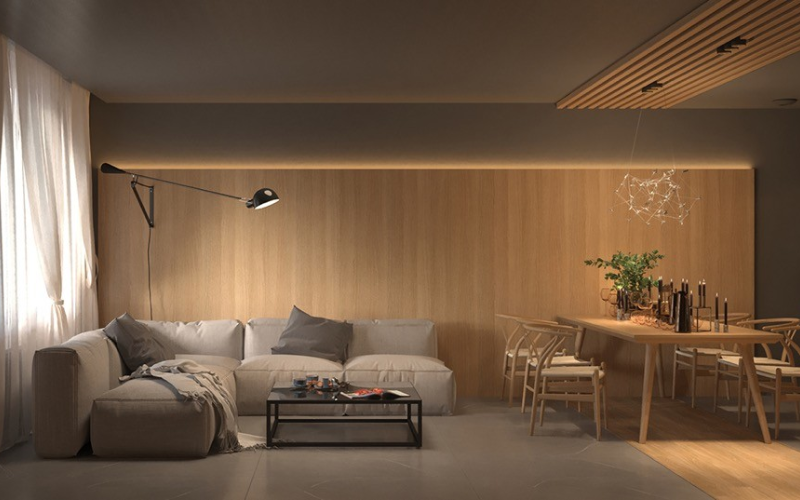
High-end projects using Italian leather often favor indirect lighting, allowing leather surfaces to “breathe,” reducing glare while emphasizing natural grain.
This explains why leading brands such as Poltrona Frau and Baxter test their products under multiple lighting conditions before mass production.
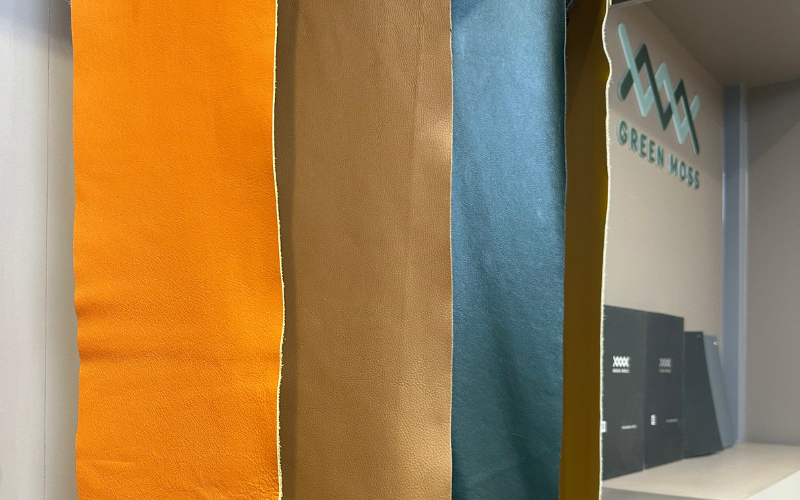
5. GreenMoss Material Philosophy – Leather and Light in the Same Rhythm
GreenMoss does more than import Italian bovine leather—we shape how leather lives within space. At the GreenMoss Ho Chi Minh City showroom, each display zone is designed with dedicated lighting:
| Leather Type | Recommended Lighting | Ideal Applications |
|---|
| Aniline |
3000K – Warm tone |
Lounge, villa, bespoke offices |
| Semi-aniline |
3500K – Neutral warm |
Apartments, showrooms |
| Pigmented |
4000K – Cool neutral |
F&B, hospitality, public spaces |
Architects visiting GreenMoss are encouraged to observe leather under multiple lighting angles—because only then does the material reveal its true life.
“Light is the craftsman’s second hand—it completes what technique alone cannot fully express.”
6. Conclusion – When Light Becomes the Language of Material
The relationship between light and leather is not merely technical—it is a design philosophy.
It speaks of respect for material, the ability to evoke emotion without excess, and the way humans connect with space through the senses. When light glides across a leather surface, it does more than illuminate—it tells a story:
of time, of the artisan’s hand, and of emotions that words alone cannot capture.
GreenMoss — where light and material come together to tell the story of space, with emotion as their shared language.