
- Italian Leather — An Optimal Material for Dining & Bench Seating
- 1. Pigmented Italian Leather — The Most Practical Choice for Frequent Use
- 2. Semi-Aniline Italian Leather — A Balance of Aesthetics and Function
- 3. Why Bench Seating Requires Special Attention to Shape Retention
- 4. GreenMoss — Practical Guidance for Dining Chair Upholstery
- 5. Conclusion
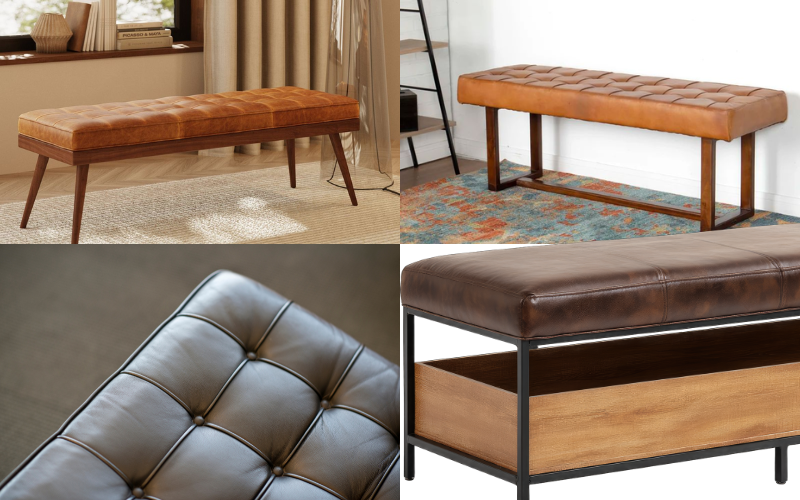
Italian Leather — An Optimal Material for Dining & Bench Seating
Italian bovine leather is widely favored for dining chairs and benches due to its intrinsic properties:
-
Dense, stable collagen fiber structure
-
Good elasticity without excessive softness
-
Excellent shape retention after upholstery
-
Deep, refined color with long-term color stability
However, not all Italian leathers are suitable for dining use.
The choice of surface finishing plays a decisive role in daily usability.
1. Pigmented Italian Leather — The Most Practical Choice for Frequent Use
Pigmented Italian leather features a protective surface coating that enhances durability and resistance to everyday stains.
Key Characteristics
-
Smooth, uniform surface
-
Strong resistance to moisture and staining
-
Easy to clean with a damp cloth
-
Minimal color variation over time
Recommended Applications
-
Residential dining chairs
-
Restaurant and café seating
-
Benches in shared living or dining areas
Performance Benefits
-
Stable shape retention
-
Reduced creasing at seating points
-
Low-maintenance care requirements
For projects prioritizing practicality and durability, pigmented Italian leather is consistently recommended by GreenMoss.
2. Semi-Aniline Italian Leather — A Balance of Aesthetics and Function
Semi-aniline Italian leather preserves more of the hide’s natural character while receiving a light protective treatment suitable for interior use.
Key Characteristics
-
Soft, comfortable tactile feel
-
Naturally rich color depth
-
Higher aesthetic value than fully pigmented leather
Recommended Applications
-
Dining chairs in high-end residences
-
Benches in apartments, villas, or showrooms
-
Spaces that emphasize material expression
Usage Notes
-
Requires correct cleaning methods
-
Liquids should not be left on the surface for extended periods
Semi-aniline is ideal for projects that seek the authentic spirit of Italian leather while maintaining reasonable long-term stability.
3. Why Bench Seating Requires Special Attention to Shape Retention
Benches typically feature:
-
Long, continuous seating surfaces
-
Evenly distributed load across a wide area
-
Minimal segmented cushioning
Therefore, leather used for benches must provide:
-
Moderate elasticity
-
High fiber stability
-
Enough firmness to prevent sagging
-
Enough softness to maintain seating comfort
When the correct thickness and finishing type are selected, Italian leather helps benches retain clean lines, stable surfaces, and long-lasting form.
4. GreenMoss — Practical Guidance for Dining Chair Upholstery
At GreenMoss, leather consultation for dining chairs does not begin with color selection, but with:
-
Intensity of use
-
Cleaning frequency
-
Furniture type (chair, single seat, or long bench)
-
Overall design concept
From there, GreenMoss recommends the most suitable material solution—ensuring Italian leather not only looks refined at installation, but also performs reliably over time.
5. Conclusion
For dining chairs and benches, choosing the right Italian leather directly affects:
-
Surface durability
-
Ease of cleaning
-
Shape stability
-
Long-term user experience
Pigmented Italian leather: prioritizes durability and practicality
Semi-aniline Italian leather: balances aesthetics with tactile emotion
Most importantly, each project requires a tailored leather solution, based on real usage needs rather than purely visual preference.