- 1) What Is Circular Design—and Why It Matters to the Interior Industry
- 2) Italian Bovine Leather: From Livestock By-Product to Interior Asset
- 3) The Circular Journey of Italian Leather: Resource Optimization & By-Stream Valorization
- 4) Why Circular Design with Italian Leather Delivers Value for Investors
- 5) GreenMoss: Implementing Circular Solutions for Interior Projects
1) What Is Circular Design—and Why It Matters to the Interior Industry
Circular Design is a design philosophy that aims to eliminate waste from the outset, keep materials circulating at their highest possible value, and contribute to nature regeneration.
In premium interiors, this philosophy translates into selecting materials with long lifespans, repairability, clear reuse/take-back pathways, and measurable impact standards.
2) Italian Bovine Leather: From Livestock By-Product to Interior Asset
2.1. The By-Product Nature and Its LCA Implications
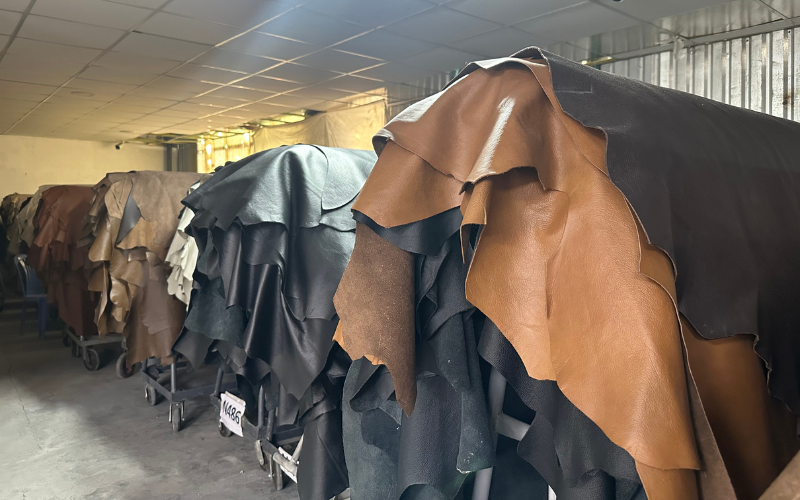
Bovine leather is a by-product of the meat industry. Rather than being discarded, hides are transformed into high-value materials for interiors, automotive, and fashion.
This perspective is critical in Life Cycle Assessment (LCA): it reduces organic waste burdens while improving overall resource efficiency across the value chain.
2.2. “Italian Quality” = Craftsmanship + Standards + Traceability
Italian tanneries emphasize rigorous control of processes, water use, chemicals, and emissions, and increasingly adopt Leather Working Group (LWG)—the leading international standard assessing environmental, social, and traceability performance.
LWG certification provides technical proof for studios and contractors when addressing project requirements in hospitality, workplaces, and premium residential developments.
Today, around one-third of global finished leather output is assessed under LWG, reflecting its broad adoption across the supply chain.
2.3. What This Means for Developers & Architects
-
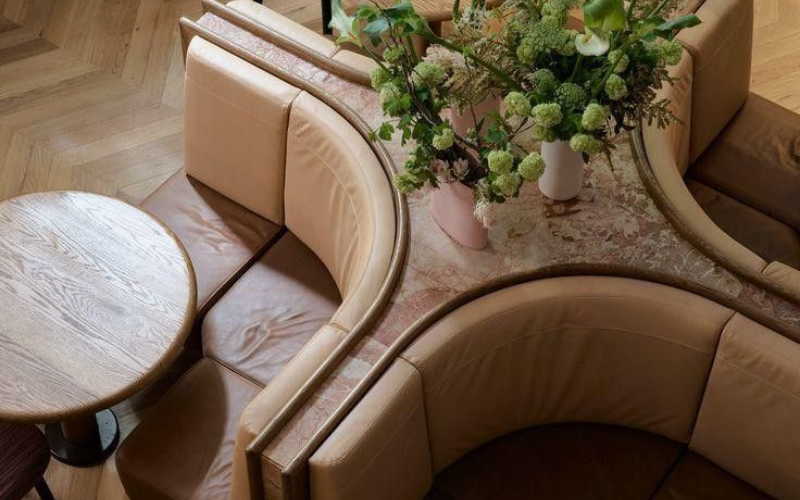
Uniqueness & aesthetics: Natural surfaces with patina that evolves over time
-
Longevity & repairability: Lower replacement frequency, aligning with TCO (Total Cost of Ownership) for public spaces
-
Compliance: Easier material documentation for ESG and Green Procurement frameworks through standardized certification (LWG)
3) The Circular Journey of Italian Leather: Resource Optimization & By-Stream Valorization
3.1. Optimizing the “Main Hide” (Raw Hide → Finished Leather)
Yield optimization and cutting strategies—such as Kind Leather models (by JBS Leather)—re-engineer the chain from traceability to optimized cutting, removing unusable sections early to reduce energy, water, and chemical intensity per usable m².
Process-level LCAs demonstrate significant reductions compared with traditional workflows.
3.2. Locking Value Through By-Streams
- Collagen & gelatin: Trimmings and offcuts can be hydrolyzed/extracted into collagen or gelatin for pharma, cosmetics, food, and bio-materials. Scientific reviews confirm hides as a key collagen source across these sectors.
- Organic fertilizers & composites: Portions of organic sludge can be composted/modified for agriculture or used in composites—subject to local regulations and project-specific validation.
3.3. Bioenergy from Wastewater/Sludge
-
Anaerobic digestion & biogas: Co-digestion of tannery sludge with other organic sludge can generate biogas. Tanning agents (e.g., chromium) affect yields, requiring appropriate pre-treatment and compliant plant design—highlighting real energy-recovery potential when systems meet standards.
3.4. Applying Circular Design in Practice
-
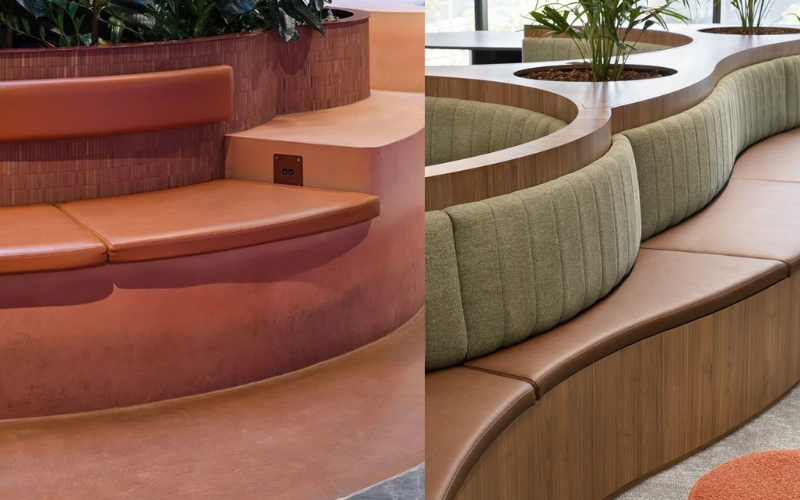
Design for longevity & repair: Specify leathers aligned to use intensity (e.g., Semi-Aniline / Pigmented / Corrected Grain for hospitality)
-
Modular design: Easy de-upholstery and re-upholstery to extend product life
-
Design for traceability: Batch labeling and LWG documentation for lifecycle management
These practices align with the three core circular principles: eliminate waste, circulate at highest value, and regenerate nature.
4) Why Circular Design with Italian Leather Delivers Value for Investors
4.1. Better ROI & TCO in High-Traffic Spaces
-
Durability & maintenance: Genuine leather offers strong mechanical performance and can be refreshed (re-finish/conditioning), resulting in longer replacement cycles than synthetics (which may hydrolyze or crack over time).
-
Emotional durability: Patina that “ages beautifully” increases perceived value over time.
4.2. Risk Management & Compliance
-
LWG certification supports environmental and social compliance, aiding tenders and ESG requirements for international hotel and office chains. LWG audits cover energy, water, waste treatment, traceability, and social criteria.
4.3. Alignment with Premium Brand Strategy
Italian leather functions as a signature material—uniting aesthetics and responsibility—well suited to brands pursuing circular strategies (longevity, repair, re-upholstery, take-back).
5) GreenMoss: Implementing Circular Solutions for Interior Projects
GreenMoss Italian bovine leather is sourced from the tannery system of Conceria Priante – JBS Leather in Italy.
In parallel, GreenMoss owns and operates JBS’s temporary import–re-export facility in Vietnam, with an average capacity of 6–8 million square feet per month, dedicated to custom orders.
This integrated model enables GreenMoss to:
-
Shorten lead times versus direct imports
-
Optimize logistics costs for B2B clients
-
Ensure consistent, stable quality through stringent controls from Italy to Vietnam
As a result, GreenMoss goes beyond distributing premium Italian leather—supporting architects, designers, and interior brands in Vietnam to deploy circular design solutions that are effective, sustainable, and highly practical.