1. Identifying Leather by Its Origin
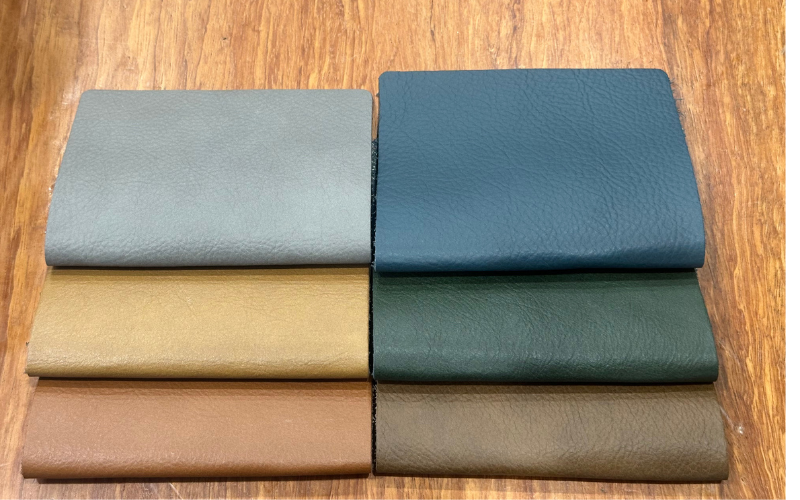
This is the most critical and reliable method for verifying genuine Italian leather.
Clear certification and documentation:
Authentic Italian leather is always accompanied by official documentation such as a Certificate of Origin (CO), CITES, or certifications from reputable organizations, including:
-
UNIC (Italian Tanneries Association)
-
ICE (Italian Trade Agency)
-
Leather Working Group (LWG) – sustainability certification for the leather industry
Factory barcodes or QR codes:
Some Italian manufacturers, such as Dani or Mastrotto, attach QR codes to each batch, allowing traceability back to the tannery.
GreenMoss imports leather through official channels from Italian tanneries under JBS Couros, complete with full CO/CQ documentation—ensuring transparency and peace of mind for all interior and design projects.
2. Identifying Leather by Physical Characteristics
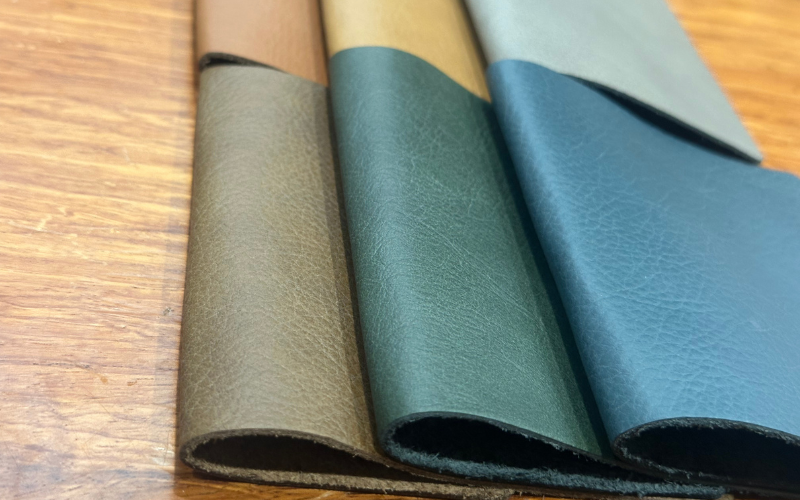
Beyond documentation, genuine Italian leather can be recognized through sensory evaluation and hands-on experience:
Natural grain:
-
Full-grain or top-grain Italian leather features a refined, natural grain with subtle variations.
-
Synthetic or industrial leather often has embossed patterns that appear uniform but lack natural depth.
Distinctive scent:
-
Genuine Italian leather has a mild, natural, slightly vegetal scent (often associated with traditional tanning processes).
-
PU or synthetic leather smells of plastic or chemicals.
Softness and elasticity:
-
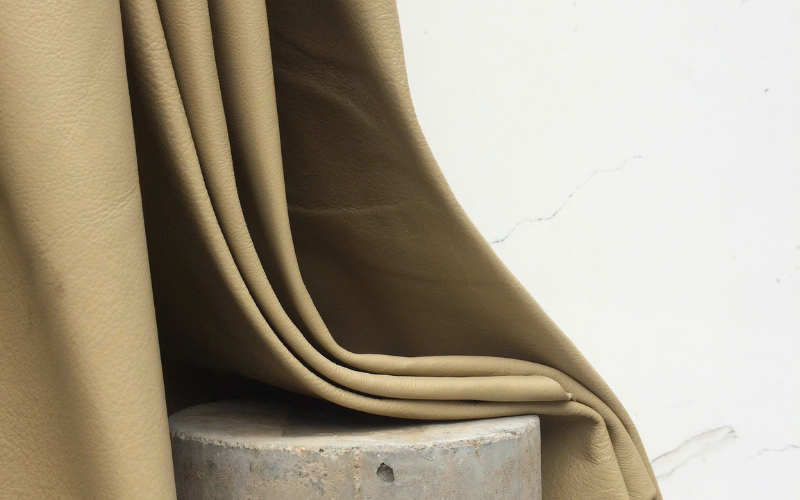
Full-grain Italian leather feels supple, elastic, and develops a beautiful patina over time.
-
Artificial leather tends to dry out quickly and may crack or crease permanently when bent.
This tactile authenticity is why premium Italian leather is often chosen for bespoke interiors—its feel cannot be replicated.
3. Simple Practical Tests
Several quick tests can be performed at showrooms or on leather samples:
Water test:
Place a drop of water on the surface. Genuine leather absorbs moisture slowly, leaving a darker spot after a few minutes; synthetic leather repels water.
Heat test:
Lightly expose an edge to heat. Real leather chars slightly and smells like burnt hair, while PU leather melts and emits plastic fumes.
Flexibility test:
Firmly bend the leather. Genuine Italian leather wrinkles naturally and quickly returns to shape; synthetic leather may crack or retain stiff creases.
Note: GreenMoss recommends performing these tests only on sample pieces, not finished products.
4. Creative Applications of Italian Bovine Leather
Italian leather is widely used beyond luxury fashion:
-
Fashion: Brands such as Gucci, Prada, and Ferragamo rely on Italian leather for handbags, footwear, wallets, and limited editions.
-
Interiors & Automotive: Ferrari, Lamborghini, and Maserati use Italian leather for seating, dashboards, and bespoke interiors.
-
Art & Craft: Bookbinding, artisanal leather goods, and handcrafted accessories.
-
Fashion Tech: Italian workshops develop tie-dye finishes, holographic effects, and antibacterial leather treatments.
With over 2,000 Italian leather references in stock, GreenMoss provides solutions for interior, fashion, hospitality, and automotive applications.
5. Sustainability Trends in the Italian Leather Industry
The Italian leather industry is leading the way in sustainable innovation:
-
Vegetable tanning (veg-tan), chrome-free tanning, and wet-white processes to reduce heavy metals
-
Tanneries certified LWG Silver/Gold
-
Kind Leather initiative by JBS Couros, reducing up to 40% of emissions and wastewater
-
Recycled leather and collagen reuse in cosmetics and new materials
GreenMoss actively supports this movement as a pioneering distributor of Kind Leather in Vietnam, aligned with ESG (Environmental – Social – Governance) standards.
Conclusion
Identifying genuine Italian bovine leather is straightforward when you understand:
-
Transparent origin documentation
-
Natural physical characteristics
-
Simple verification tests
Most importantly, choosing a reputable supplier makes all the difference.
With nearly 10 years of experience and an inventory exceeding 1,000,000 sqft, GreenMoss is committed to delivering authentic, sustainable, internationally certified Italian leather for every project.
Contact GreenMoss today to receive leather samples and professional consultation for your Italian leather solutions.