
- 1. Tanning Stage: Creating Wet Blue, Wet White, and Crust
- 2. Leather Finishing Stage
- 3. Differentiating Leather Types in the Production Chain
- Production StageCommon TermCondition Tanning Wet Blue / Wet White Tanned, still wet, no surface finish Drying & Dyeing Crust Leather Dry, dyed, no protective topcoat Surface Finishing Finished Leather Fully coated, colored, embossed, water-resistant, ready for use
- 4. Summary
In the leather industry, producing finished leather for interiors, fashion, or automotive applications requires a multi-step process.
The main stages include: tanning → drying & dyeing (crusting) → surface finishing.
One of the most critical stages in this chain is Wet Blue—chrome-tanned leather with a soft handfeel and stable structure, widely used as the base material for various finished leathers.
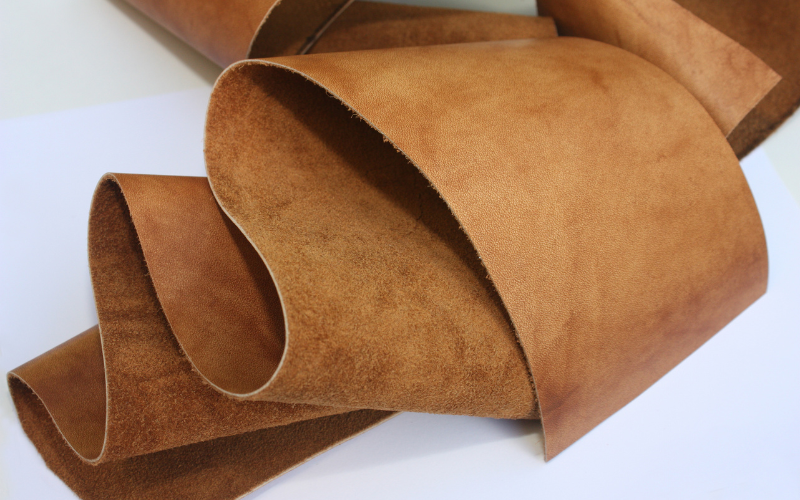
1. Tanning Stage: Creating Wet Blue, Wet White, and Crust
What Is Wet Blue Leather?
Wet Blue is leather that has been chrome-tanned, remains moist, and displays a light bluish-gray color—resulting from the chemical reaction between hide fibers and chromium ions.
At this stage, the leather has achieved durability and stability, making it easy to store, transport, and further process.
Key advantages of Wet Blue:
-
Soft, strong, and highly flexible
-
Long storage life
-
Easy to dye and finish in later stages
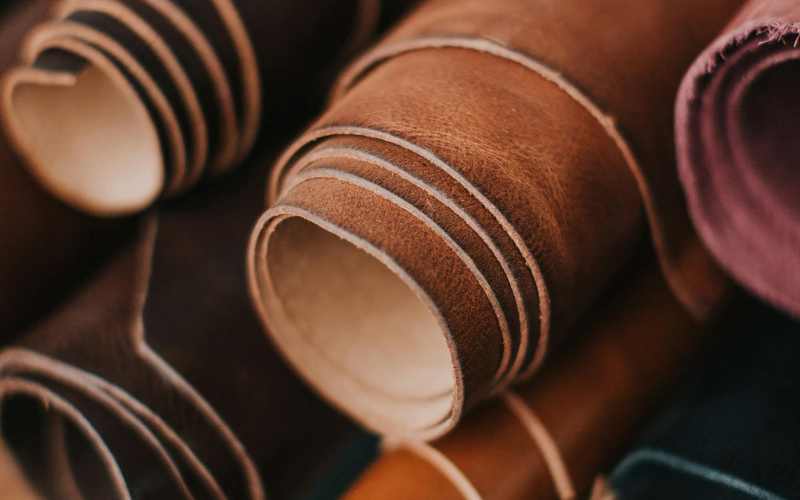
What Is Crust Leather?
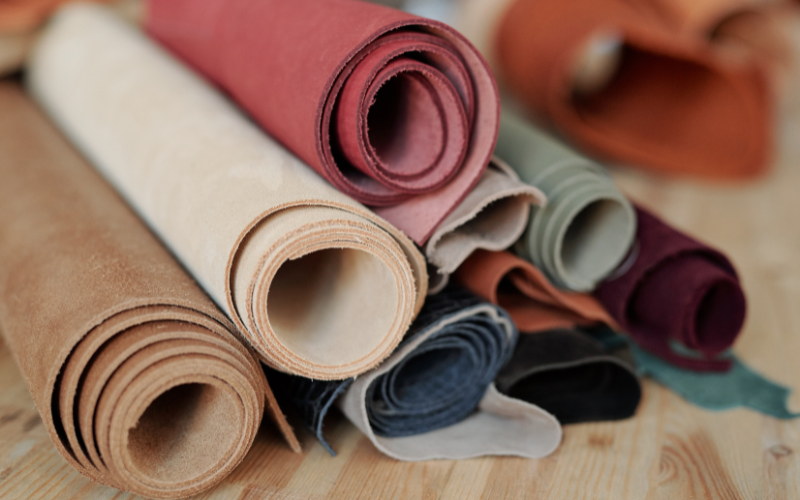
- Crust leather is leather that has been dried after the Wet Blue or Wet White stage, then dyed—but not yet surface-finished (no paint, lacquer, or protective coating applied).Crust leather can be categorized into:
- Vegetable crust: derived from vegetable tanning
- Chrome crust: derived from chrome tanning
2. Leather Finishing Stage
Once leather reaches the Crust or Wet Blue stage, tanneries proceed with finishing, which may include:
-
Dyeing
-
Application of surface coatings (lacquer, polyurethane, etc.)
-
Embossing and special surface effects (pull-up, distressed, metallic, etc.)
-
Water-repellent and anti-soiling treatments
This stage ensures color uniformity, controlled sheen, and specific surface effects, tailoring the leather to its intended use—whether for interior upholstery, handbags, or automotive interiors.
3. Differentiating Leather Types in the Production Chain
Production Stage Common Term Condition
Tanning
Wet Blue / Wet White
Tanned, still wet, no surface finish
Drying & Dyeing
Crust Leather
Dry, dyed, no protective topcoat
Surface Finishing
Finished Leather
Fully coated, colored, embossed, water-resistant, ready for use
| Production Stage | Common Term | Condition |
|---|---|---|
| Tanning | Wet Blue / Wet White | Tanned, still wet, no surface finish |
| Drying & Dyeing | Crust Leather | Dry, dyed, no protective topcoat |
| Surface Finishing | Finished Leather | Fully coated, colored, embossed, water-resistant, ready for use |
4. Summary
- Wet Blue is the foundational stage of chrome tanning, serving as a standardized semi-finished leather
- Crust leather is the next step—dyed but not yet surface-finished
- Finished leather is the final product, ready for application in interior design, fashion, and automotive industries
Understanding these stages helps designers, manufacturers, and buyers make informed decisions when selecting leather materials for specific performance and aesthetic requirements.