
"Leather sofas feel freezing in winter and sticky-hot in summer" — this is probably one of the top reasons people hesitate before buying a leather sofa, especially in a country with distinct seasons like Vietnam. But is this claim entirely true, or is it just a long-standing misconception?
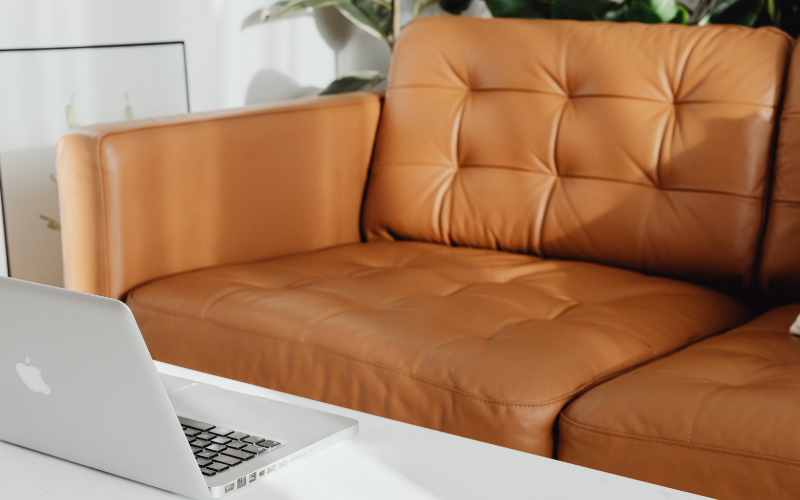
The Truth: Leather Doesn't "Hold" a Fixed Temperature — It Adapts to Its Environment
The first thing to understand is this: genuine leather doesn't generate heat or retain cold the way many people assume. Leather is, by nature, a poor heat conductor — meaning it doesn't transfer heat or cold as quickly as metal does. That cool sensation you feel the moment you touch a leather sofa is simply because leather doesn't actively generate warmth, not because it's actually colder than the room itself.
In other words, if your room is cool, the leather sofa will feel cool; if the room is warm, the sofa will feel warm too. Leather is a naturally porous material capable of "breathing" and adapting to the surrounding temperature — much like a leather jacket, which keeps you warm in winter yet stays breathable in summer.
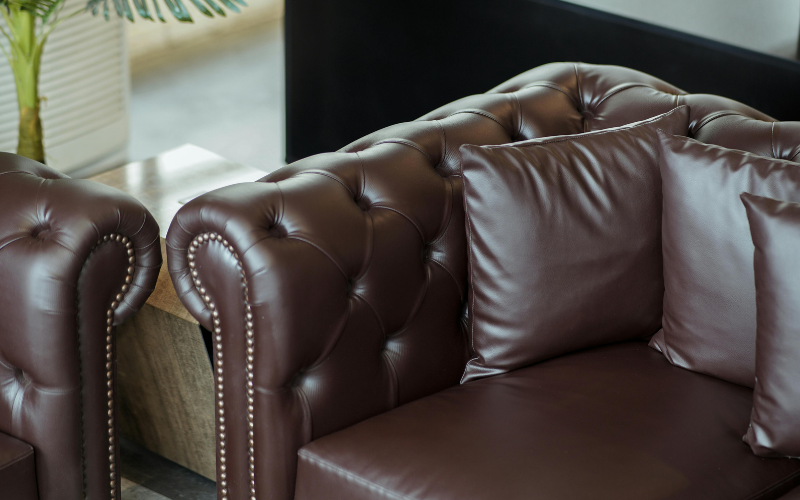
Why Does It Still Feel Cold at First Touch?
This is where most of the confusion comes from. That initial cold sensation when you sit down is real — but it's only a momentary sensation, not an inherent property of the material.
Leather isn't actually colder than the surrounding air, but it stores and conducts heat differently than fabric does — similar to how water at 18°C feels much colder than air at the same 18°C, even though the temperature is identical. This is why a leather sofa and a fabric sofa in the same room can feel very different to the touch, despite being at the same actual temperature.
The good news: this cold sensation fades quickly. With full-grain Aniline leather — leather that retains its natural pores and isn't coated with a thick protective layer — the surface can adjust to body temperature in under 30 seconds.
What About Summer — Does Leather Really Get Hot and Sticky?
This is another common misconception. Genuine leather is a porous, breathable material that allows moisture to escape — helping you avoid that stuffy, sweaty feeling in hot weather.
Interestingly, it's faux leather (PU/synthetic leather) that actually causes stuffiness and stickiness in hot weather. Synthetic leather lacks the natural breathability of genuine leather — which is precisely why real leather commands a higher price. If you've ever sat on a faux-leather sofa in summer and felt your back sticking uncomfortably to it, that's a property of the sealed PU coating — not a characteristic of genuine leather.
What Actually Affects How a Leather Sofa Feels Temperature-Wise
Rather than blaming "leather" as a material, here are the real factors that determine whether your leather sofa stays comfortable year-round:
1. Leather type and surface finish : Pigmented leather (which has a thicker protective coating) conducts heat differently than full-grain Aniline leather, making that initial cool sensation more noticeable when you first sit down. If you're sensitive to that initial coolness, Aniline or Semi-Aniline leather is a better choice than Pigmented.
2. Room temperature: Since leather adapts to its surrounding environment, room conditions — air conditioning, sun exposure, ventilation — directly affect how the sofa feels when you sit down, not the leather itself.
3. Leather color: Like any material, darker leather absorbs more heat under direct sunlight than lighter colors — this is basic physics, not a leather-specific trait.
4. Genuine vs. faux leather quality. This is the most important factor. Genuine leather breathes; faux leather doesn't — and the difference in temperature comfort between these two materials is far greater than any difference between seasons.
So, Is Leather Right for Vietnam's Climate?The answer is a clear yes, with a few considerations in mind:
- Choose Aniline or Semi-Aniline leather if you want the fastest adaptation to body temperature
- Keep the sofa out of prolonged direct sunlight — not because leather "fears heat," but because any dark-colored material absorbs heat when exposed to sun for extended periods
- Choose genuine leather over synthetic leather if summer breathability is a priority — this is where real leather truly outperforms
- In living rooms with regular air conditioning (common throughout Vietnam), the "cold in winter, hot in summer" concern is barely an issue at all