
1. Can Kobe cattle hide be tanned?
The answer is yes—technically, it can. From a theoretical standpoint, any bovine hide, including that of Kobe cattle, can undergo the tanning process. Leather is a natural by-product of the meat industry, and Kobe cattle are no exception.
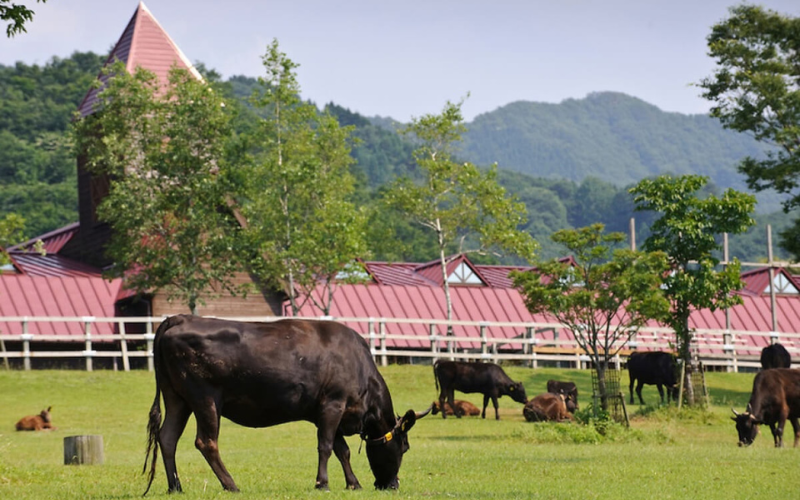
Kobe cattle belong to the highest-grade Wagyu breeds of Japan, renowned worldwide for their exceptionally tender meat and rich marbling. These characteristics, however, have a direct impact on the physical properties of the hide.
2. Why Kobe cattle hide is not common in industrial leather production
Thin hide and loose collagen structure
Compared to European cattle breeds such as Limousin or Charolais, Kobe cattle hides tend to have a looser collagen fiber structure, a thinner epidermal layer, and less consistent thickness.
As a result, the hide lacks the structural strength required for applications demanding high durability, such as sofas, seating, wall panels, or large upholstery surfaces.
Smaller hide size
Kobe cattle are raised under highly controlled conditions with meat quality as the primary objective, not hide yield. Consequently, the resulting hides are smaller than standard industrial requirements, making them inefficient for large-scale or mass production.
Extremely high cost
With Kobe beef priced at approximately USD 200–300 per kilogram, the raw hide becomes one of the most expensive bovine hides in the world. This dramatically increases production costs and makes Kobe leather economically uncompetitive when compared to commercial-grade hides.
3. Real-world applications – when Kobe leather is handcrafted
Although rare, some Japanese artisanal workshops do tan Kobe cattle hides to create extremely limited-edition items such as wallets, watch straps, and small leather accessories—primarily for collectors or cultural showcases.
These products are typically custom-commissioned or produced in symbolic quantities, serving more as cultural or storytelling pieces rather than scalable commercial materials.
4. Conclusion: Kobe leather – luxurious, but not practical
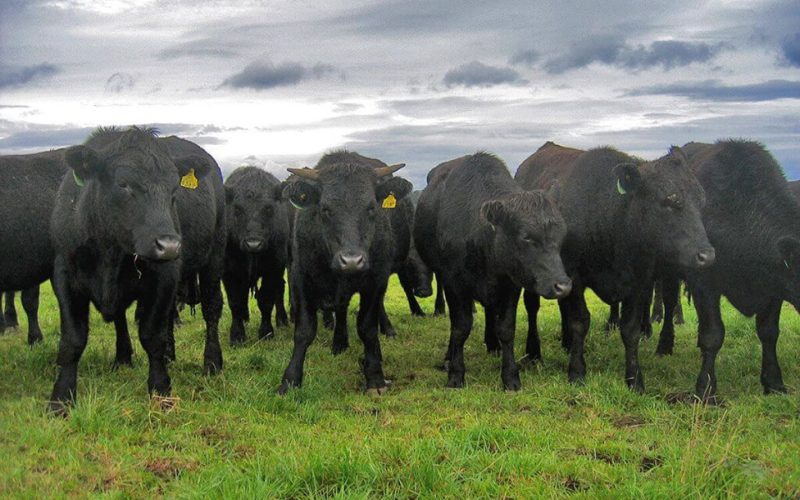
Kobe cattle leather represents a fascinating intersection of craftsmanship, cultural value, and exclusivity. However, due to its structural limitations, small hide size, and exceptionally high cost, it is not suitable for industrial tanning or large-scale applications, particularly in sectors requiring durability, consistency, and stable supply.
For this reason, the global high-end leather industry continues to prioritize European bovine hides or selected American sources—where uniform quality, structural strength, and scalable production can be reliably achieved.
Thay vào đó, ngành thuộc da cao cấp thế giới vẫn ưu tiên các dòng da bò châu Âu hoặc nhập khẩu từ Mỹ – nơi đảm bảo sự đồng đều về chất lượng và khả năng sản xuất quy mô lớn.