In the premium leather industry, the quality of a hide is not determined solely by tanning techniques.
It begins much earlier—at the biological foundation of the cattle breed itself.
Among the world’s most respected cattle breeds, Angus cattle are highly regarded for their thick, dense hide and natural structural stability—factors that directly influence material performance in interior upholstery and furniture applications.
To understand why Angus leather is so widely favored, we must return to its natural origins and biological evolution.
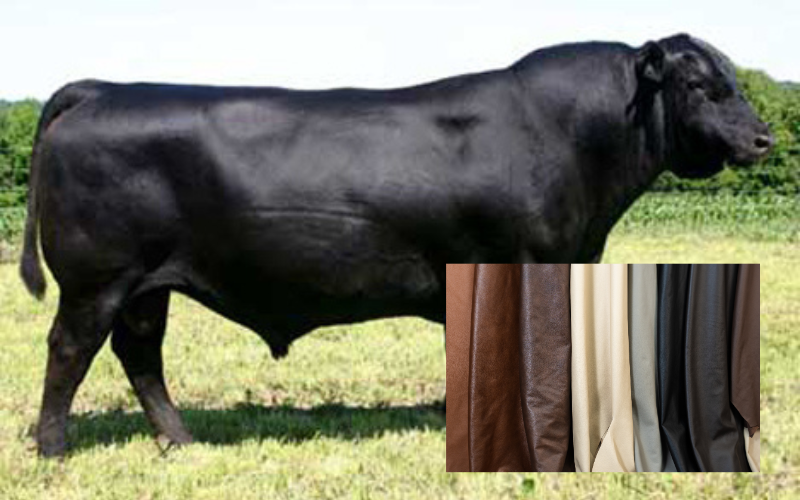
1. The Origin of Angus Cattle – When Climate Shapes Hide Structure
Angus cattle originate from northeastern Scotland, specifically the historic counties of Aberdeenshire and Angus—a region characterized by:
In such an environment, survival depends heavily on the strength of the skin and connective tissues. Over many generations, Angus cattle developed biological traits that directly respond to these environmental pressures.
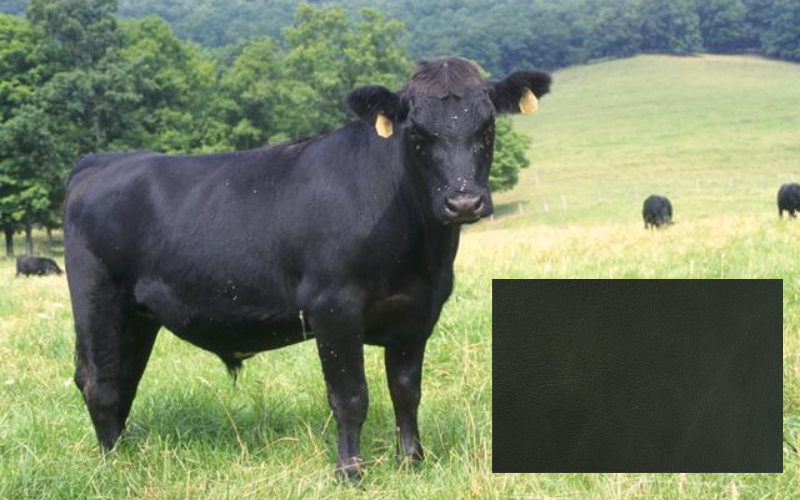
2. Evolution in a Harsh Natural Environment (18th–19th Century)
From the 18th to the 19th century, Angus cattle were raised through free-range grazing, not industrial confinement. This required them to:
The result was the development of a balanced biological system, where the hide became a critical protective layer essential for survival.
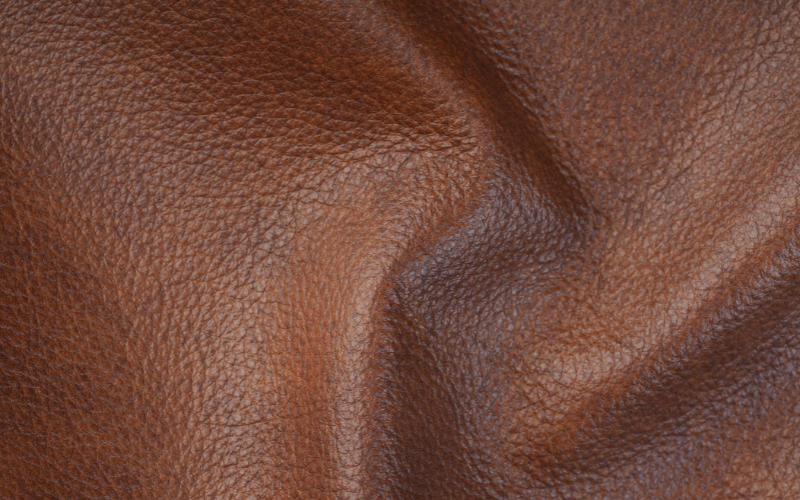
3. Thick, Dense Hide – A Natural Biological Barrier
One of the most distinctive features of Angus cattle is their thick, firm hide with high elasticity.
Biological significance:
Material significance:
-
High tensile and flex strength after tanning
-
Reduced risk of tearing or thinning in stress-prone areas
-
Ideal for upholstery requiring long service life
This is why Angus leather is commonly selected for sofas, lounge chairs, and furniture exposed to continuous use.
4. Collagen Fiber Structure – The Core of Elasticity
Angus cattle develop a dense, interwoven collagen fiber network, allowing the hide to be both strong and flexible.
Collagen characteristics in Angus leather:
Impact on tanned leather:
In flex resistance testing (≥ 50,000 cycles), Angus-derived leather consistently performs well, meeting the demands of high-end interior standards.
5. Naturally Polled (Hornless) – An Often Overlooked Advantage
Angus cattle are naturally hornless (polled)—a genetic trait, not the result of dehorning.
Benefits in husbandry:
-
Reduced physical collisions between animals
-
Lower incidence of hide scarring
-
More uniform hide surfaces
Benefits for the leather industry:
This indirect advantage plays a significant role in evaluating hide quality for upholstery and interior applications.
6. Angus Leather from an Interior Material Perspective
From these biological foundations, Angus leather offers several advantages in interior use:
-
Consistent thickness
-
Strong fiber structure
-
Excellent shape retention
-
High tensile and flex durability
-
Well suited for semi-aniline and pigmented finishes
Angus leather is particularly suitable for:
7. Conclusion – When Cattle Breed Determines Material Quality
Leather quality does not begin at the tannery—it begins with the cattle breed and its growing environment.
Originating from the harsh landscapes of Scotland, Angus cattle provide an ideal biological foundation:
thick hides, strong collagen networks, structural stability, and fewer defects.
These characteristics make Angus cattle one of the most important foundations for high-quality upholstery leather, where durability, tactile comfort, and long-term material performance are paramount